
A Modern Guide to Donor Wall Recognition
A great donor wall does so much more than just list names on a plaque. It’s a powerful fundraising engine, a living story of your organization's impact, and a public testament to the partnerships that fuel your mission. Think of donor wall recognition as transforming a simple 'thank you' into a strategic tool for donor stewardship and future growth.
How Donor Wall Recognition Drives Fundraising
It’s a huge missed opportunity to see a donor wall as just a post-campaign obligation. Instead, you should frame it as an active, ongoing part of your fundraising cycle. A well-executed recognition display is a constant, visible reminder of philanthropy in action, creating a powerful narrative that engages everyone who walks past it—from first-time visitors to your most loyal supporters.
This kind of installation, whether it’s physical or digital, acts as powerful social proof. When potential donors see the names of respected community members, local businesses, and their own peers, it validates the importance of your cause. It builds a sense of momentum and makes new supporters eager to join a growing movement of generosity.
Building a Lasting Culture of Philanthropy
An effective donor wall doesn’t just acknowledge past gifts; it actively cultivates future ones. By publicly celebrating contributions, you create an environment where giving is seen, valued, and emulated. This fosters a true culture of philanthropy that can yield returns for years to come.
The secret is to connect the names on the wall to the real, tangible impact they’ve made. When you get this right, you can achieve several critical fundraising goals at once:
Strengthens Donor Loyalty: Public recognition makes donors feel deeply valued, which is the cornerstone of retention. Honored donors are far more likely to give again and become lifelong advocates for your mission.
Inspires New Gifts: The display acts as a gentle, yet persuasive, call to action. It shows prospective donors a clear and prestigious path to being recognized for their own support, motivating them to contribute.
Communicates Your Mission: A thoughtfully designed wall tells a visual story about your organization’s values and the community that sustains it, reinforcing your mission with every single glance.
By transforming a list of names into a compelling narrative of collective impact, a donor wall becomes a strategic asset. It’s not just about gratitude; it's about creating a perpetual cycle of giving that sustains and grows your organization.
Ultimately, strategic donor wall recognition turns a static display into a dynamic storytelling tool. It’s a testament to your community's belief in your work and a powerful motivator for future support. To really dive into this concept, you can learn more about how donor walls boost fundraising and inspire generosity in our detailed guide. This strategic mindset is the first step toward creating a recognition program that not only honors donors but actively drives your fundraising success.
Choosing Between Traditional and Digital Donor Walls
Picking the right donor wall isn't just a design choice; it's a strategic decision that shapes how you tell your organization's story for years to come. This is the moment you decide which medium best honors your supporters and aligns with your future. The two main paths you can take are the classic, physical installation or a modern, digital display. Each has its own unique way of celebrating generosity.
A traditional donor wall offers a kind of permanence and prestige that's hard to beat. Think engraved brass, etched glass, or beautifully carved wood—these pieces become a physical part of your building’s architecture. They create a tangible, lasting legacy, communicating a deep-seated respect for the support that built your foundation. For organizations looking to create a historical record of giving, a traditional wall stands as a quiet, powerful monument to its community.
On the flip side, digital donor walls bring unmatched flexibility and a dynamic canvas for storytelling. These high-resolution screens do more than just list names. They can show videos of your mission in action, share personal stories from the people you serve, and feature photos from your latest fundraising gala. It’s an engaging, interactive experience for every visitor.
The Classic Appeal of Traditional Walls
The real strength of a traditional wall is its timeless, enduring nature. These installations are perfect for any organization that wants to send a message of heritage and unwavering commitment.
A Sense of Permanence: A name carved in stone or etched into glass feels forever, honoring a donor’s contribution for generations to see.
Architectural Integration: Traditional walls are often designed to blend seamlessly with a building's style, becoming a beautiful and integral part of the space itself.
Prestige and Honor: The classic look of materials like bronze, marble, and rich mahogany carries an inherent weight, making the recognition feel especially significant.
The Dynamic Power of Digital Recognition
Digital displays are more than just a modern alternative; they represent a whole new way to practice ongoing donor stewardship. They are living, breathing platforms that can evolve right alongside your community. This approach transforms a static list of names into an active storytelling tool, boosting engagement and inspiring new gifts.
The infographic below breaks down the core functions of any great donor recognition system, showing how both traditional and digital approaches aim to inspire, strengthen, and communicate.
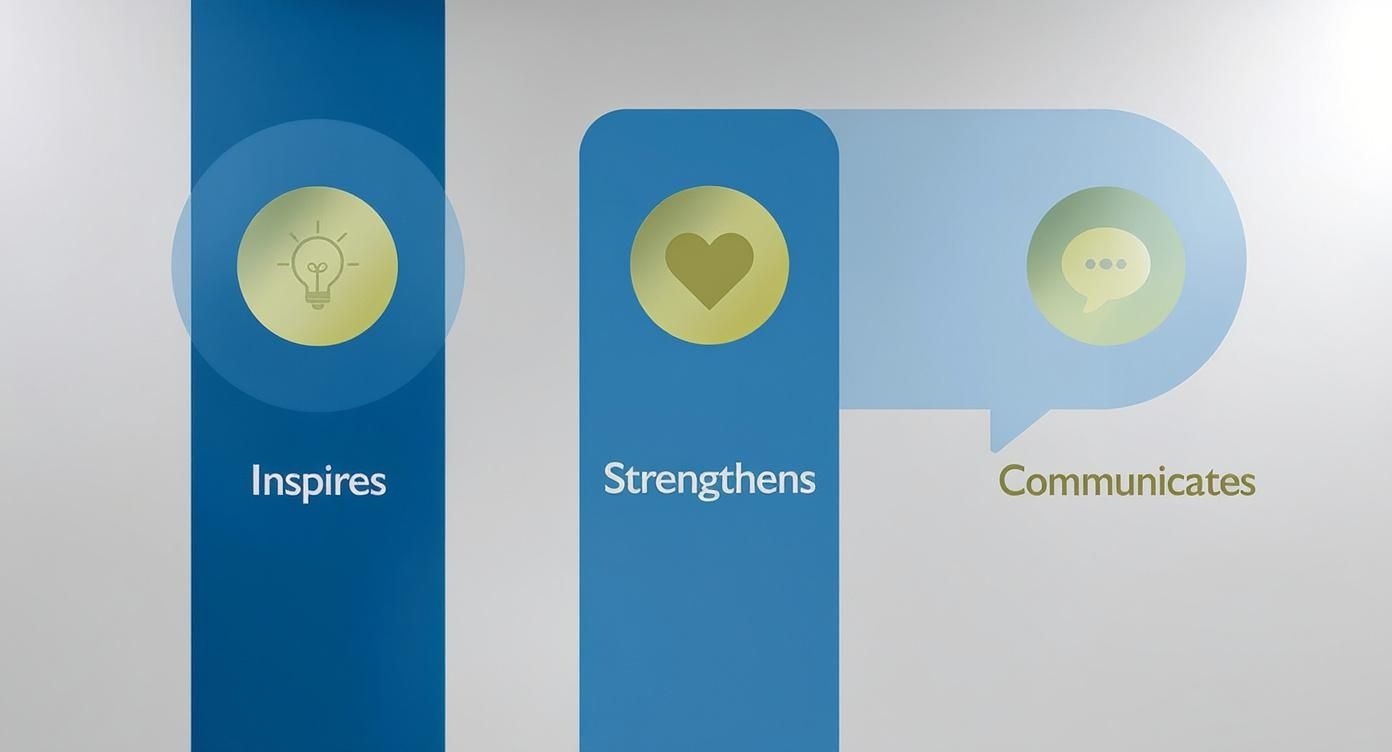
As you can see, the ultimate goal is always the same: inspire more giving, strengthen community bonds, and communicate your impact. The medium you choose simply determines how you get there.
Comparing Traditional vs. Digital Donor Walls
To help you weigh the options, here’s a straightforward comparison of the two approaches. Think about your goals, your space, and your community as you review the key differences.
Feature | Traditional Donor Wall | Digital Donor Wall |
|---|---|---|
Aesthetic | Classic, permanent, architectural. | Modern, dynamic, and visually engaging. |
Content | Static names and giving levels. | Dynamic content: videos, photos, stories, real-time updates. |
Updating | Costly and labor-intensive to add new names. | Easy and instant updates via software. |
Interactivity | Passive viewing experience. | Interactive touchscreens can engage visitors directly. |
Cost | High initial investment, with added costs for updates. | Higher initial hardware cost, but lower long-term update costs. |
Lifespan | Can last for decades with minimal maintenance. | Limited by technology lifecycle (typically 5-7 years). |
Best For | Capital campaigns, legacy gifts, conveying heritage. | Annual funds, growing communities, dynamic storytelling. |
Ultimately, the choice comes down to strategy. A traditional wall is an anchor to your history, perfect for honoring legacy donors. A digital wall is an engine for ongoing engagement, ideal for an organization with a rapidly expanding community. Many institutions are even blending the two, creating hybrid displays that offer the best of both worlds.
To see how this works in practice, check out our guide on how digital donor walls boost fundraising engagement. The right decision will always be the one that aligns with your mission, your audience, and your vision for the future.
Designing a Donor Wall That Tells a Story
A great donor wall is so much more than a list of names. It’s a piece of visual storytelling. When you approach it with real intention, you transform a simple inventory into a compelling narrative that celebrates generosity, broadcasts your mission, and inspires the next wave of giving. Think of it less like a piece of furniture and more like a curated museum exhibit—something that grabs your attention and tells the story of your community's collective impact.
The whole process kicks off when you start thinking about how the wall will live within its environment. A truly successful design shouldn't feel bolted on; it should feel like a natural, seamless extension of your building's architecture and your organization's brand. It's there to complement the space, not compete with it.
Strategic Placement for Maximum Impact
Where you put your donor wall is just as critical as what it looks like. The location has a huge effect on both visibility and the emotional connection people will feel. Of course, putting it in a high-traffic spot like a main lobby or a busy hallway guarantees it gets seen by the widest audience possible.
But "high traffic" isn't the only thing that matters. The space itself should feel meaningful.
Near the Point of Impact: Try placing the wall right next to the very thing philanthropy made happen—like just outside a new hospital wing or inside a beautifully renovated university library. This creates an immediate, powerful link between the names and the real-world results.
In a Place of Reflection: Sometimes, a quieter, more contemplative space works wonders. It gives visitors a chance to pause, absorb the names, and really connect with the story you’re telling.
A Destination Point: A truly stunning donor wall can become a landmark in its own right, drawing people toward it and encouraging them to spend a few moments engaging with its message.
The best location is one that balances high visibility with contextual meaning. It’s that sweet spot where the story of giving connects directly with the physical evidence of its success, making the narrative both visible and tangible.
Ultimately, the placement needs to feel deliberate. You’re not just acknowledging donors; you're actively weaving their story into the daily experience of your space.
Establishing a Clear Visual Hierarchy
One of the most common design challenges is figuring out how to honor your top-tier donors without making everyone else feel less important. The answer is a strong visual hierarchy. This is a classic design principle where you use things like scale, color, and placement to guide the viewer's eye and signal significance. The names of your lead donors might be bigger, positioned more prominently, or even crafted from a different material to show their foundational role.
But a great donor wall makes everyone feel like they're part of the team. You can pull this off by grouping donors into clearly defined tiers and using consistent formatting for all the names within each level. This creates a powerful sense of community and shared purpose, showing how gifts of all sizes come together to build something amazing.
Your design should also be able to tell a story over time. You can weave in narrative elements directly into the display itself, turning it into an ongoing story. Find out more about 8 powerful storytelling strategies to enhance donor engagement in nonprofits that can help. The goal is to communicate both individual generosity and collective achievement.
Planning for Accessibility and Future Growth
Equally important is the need to plan for future growth from the outset. A static wall that is cumbersome to update can quickly transform into a source of frustration. To avoid this, implementing a modular design is the most effective strategy. This approach not only facilitates easy updates but also allows your donor wall to evolve alongside your organization.
Modular Panels: Using individual panels or plaques that can be easily added, removed, or rearranged makes it a breeze to accommodate new donors without having to redo the entire wall.
Scalable Systems: Digital displays are naturally modular, since you can add endless updates with a few clicks. For physical walls, designing with a grid system or leaving planned expansion areas from day one is the way to go.
When you plan for growth, you're creating a living document of philanthropy—one that can evolve right alongside your organization. This forward-thinking approach ensures your donor wall recognition stays relevant, beautiful, and inspiring for years to come.
Once you have a design concept that feels right, it’s time to build the strategic heart of your donor wall: the recognition levels. This is where we shift from pure aesthetics to the psychology of what motivates people to give. A well-thought-out tier system is much more than a way to organize names; it creates a clear, aspirational path that encourages donors to deepen their support.
Think of your tiers like rungs on a ladder. Each one should feel attainable, yet just enough of a stretch to inspire donors to climb higher. This isn't guesswork. The process should start with a deep dive into your own fundraising data. Look at past giving patterns to see where natural donation clusters form—these groups are the perfect foundation for your giving levels.
The key is to set thresholds that feel both meaningful and within reach. If the jump between tiers is too wide, you risk discouraging donors who feel they can’t make the leap. But if the tiers are too close, they lose their prestige. You've found the sweet spot when a donor who gave $750 looks at the $1,000 level and thinks, "I can do that next time."
Naming Tiers That Resonate with Your Mission
The names you give your recognition levels are a huge storytelling opportunity. Sure, everyone understands "Gold," "Silver," and "Bronze," but those labels do absolutely nothing to connect donors to your mission. Your donor wall recognition becomes exponentially more powerful when the tier names reflect the actual work you do.
Instead of falling back on generic metals, craft names that create a sense of partnership and impact.
A hospital could have tiers like "Healing Partners," "Community Caretakers," and "Guardians of Health."
A university might use "Founders Circle," "Scholars Society," and "Legacy Fellows."
An arts organization could feature "Visionaries," "Innovators," and "Patrons of the Arts."
Mission-driven names like these transform a simple donation into an identity. A donor is no longer just a "Gold" contributor; they are a "Visionary Partner," a title that forges a much deeper connection to your cause and gives them a real sense of ownership in its success.
A well-named tier system turns donors into partners. It shifts their identity from someone who simply gives money to someone who is an integral part of the mission, strengthening their emotional investment in your organization's future.
Establishing a Fair and Consistent Inscription Policy
With your tiers defined, the next critical step is to hammer out a clear and consistent inscription policy. Think of this document as your official rulebook for how names will appear on the wall. It’s your best defense against confusion, awkward conversations, and hurt feelings, ensuring every single supporter is treated fairly.
A solid policy should proactively answer the most common questions before they're even asked.
Your inscription policy should clearly outline the guidelines for:
Family and Individual Names: How will you handle requests for "The Smith Family" versus "John and Jane Smith"? Decide on a standard format.
Corporate Recognition: Set the rules for displaying company names. Will you allow logos, and if so, at which giving levels?
Anonymous Requests: Have a clear procedure for honoring donors who wish to remain anonymous, ensuring their generosity is acknowledged appropriately without compromising their privacy.
Memorial and Honorary Tributes: Establish a respectful and consistent format for inscriptions like "In memory of" or "In honor of."
This policy becomes an essential tool for your fundraising team, giving them the confidence to have transparent conversations with donors from day one. By setting these rules upfront, you ensure your donor wall recognition program is managed with integrity, making every supporter feel that they’ve been treated fairly and their contribution has been honored with respect.
Making the Business Case for Your Donor Wall
Getting your board and leadership team on board with a new donor wall often comes down to one thing: reframing the conversation. It’s easy to see these installations as just a line item expense—a beautiful but optional “thank you.” The reality is a modern donor wall is a powerful fundraising tool with a clear, measurable return on investment.
When you invest in powerful donor wall recognition, you’re not just spending money; you’re investing in donor retention. We all know it costs far more to find a new donor than to keep an existing one, and public acknowledgment is a cornerstone of making your supporters feel truly valued. A thoughtfully designed wall deepens those relationships, strengthens loyalty, and absolutely encourages repeat giving.
This visible display of generosity also creates powerful social proof that inspires new and larger gifts. When visitors see the names of respected community leaders and their peers on your wall, it validates the importance of your cause. It creates an aspirational path for their own philanthropy.
A Strategic Asset for Your Fundraising Pipeline
Beyond the direct financial returns, a donor wall acts as a constant, silent fundraiser working for you 24/7. It communicates your organization's stability and success to every single person who walks through your doors, building critical credibility and trust.
Think of it as the physical proof of your fundraising success story. It helps your development team in a few key ways:
Cultivating Major Gifts: The wall provides a tangible example of how major donors are honored, making it much easier to discuss recognition opportunities during solicitations.
Strengthening Community Ties: It showcases the broad base of support your organization has, from individuals to corporations, reinforcing your role as a community pillar.
Boosting Campaign Momentum: During a capital campaign, the promise of recognition on a prominent wall can be an incredibly powerful motivator to get donors across the finish line.
By shifting the conversation from cost to investment, you can show that a donor wall isn't just about acknowledging the past. It’s an essential piece of infrastructure that actively builds philanthropic momentum for the future, strengthening your entire fundraising pipeline.
How Do We Handle Updates and Future Additions?
This is a big one. What happens when a new major gift comes in after the wall is finished? The last thing you want is a beautiful display that's instantly outdated. Planning for the future is everything.
For a traditional, physical wall, think modular. Using individual plaques or panels that can be easily added, rearranged, or swapped out is the smartest way to go. It saves you from a complete, and costly, overhaul down the line.
For digital walls, life is much simpler. New names, photos, and stories can be uploaded in minutes using content management software. The critical takeaway? Decide on your update strategy before a single panel is fabricated.
The most successful donor recognition programs are living documents, not static monuments. By building in a clear and easy process for updates, you signal to your community that the story of generosity is ongoing and there is always room for more supporters to be celebrated.
What Is the Standard Etiquette for Inscriptions?
Inscription policies can feel like a minefield, but the key is consistency. Getting ahead of the common questions about how to list family names, corporate partners, and memorial gifts will save you a lot of headaches.
Here’s how to create a simple framework:
Family Names: Decide on a standard format ahead of time. Will you use "The Miller Family" or "John and Jane Miller"? The best approach is often to let donors choose from a few pre-approved options.
Corporate Logos: Will you allow logos? At what giving level does that become a benefit? This often works well as a premium recognition perk reserved for your top-tier corporate sponsors.
Memorial Tributes: Establish a respectful and uniform format, like "In Loving Memory of" or "In Honor of," to maintain a consistent, dignified tone across the entire display.
Putting these guidelines in writing gives your fundraising team a clear script for these important conversations. It ensures fairness, prevents misunderstandings, and shows every donor that their contribution is being handled with the care and respect it deserves.
Ready to create a donor wall that truly tells your story and inspires your community? The team at Stobbe Design specializes in crafting bespoke recognition displays that honor your supporters and reflect your mission. From initial concept to flawless installation, we are your dedicated partners in celebrating generosity. Learn how we can bring your vision to life at https://www.stobbedesign.com.

Comments