
What Donors Actually Want From Recognition: A Data-Driven Guide
When it comes to donor recognition, what donors actually want is often simpler and more profound than organizations assume. They crave a genuine connection to your mission, clear evidence of their gift's impact, and a sense of belonging to a community that shares their values.
True recognition is less about the size of a plaque and more about the depth of the relationship.
Decoding Donor Motivations Beyond the Plaque

Let's move past the idea that a donor recognition wall is just a fancy "thank you" note. Instead, think of it as a strategic conversation—a physical representation of the bond between a supporter and your cause. It’s an opportunity to meet the deep, human needs that drive philanthropy in the first place.
At its core, a gift is an expression of hope and belief. Donors aren't just giving money; they are investing in a future they want to help create. Effective recognition validates that belief and honors their role as a partner in your mission.
The Three Pillars of Meaningful Recognition
Understanding what donors actually want from recognition starts by looking at their core motivations. These motivations go far beyond a simple ego boost and tap into fundamental desires for connection and purpose.
Impact: Donors need to see the tangible results of their generosity. They want to know their gift didn't just disappear into a budget but actively built a new wing, funded a scholarship, or saved a local landmark.
Connection: Giving is a social act. Donors want to feel like part of a dedicated community of supporters. A recognition display reinforces this sense of belonging, showing them they are not alone in their commitment.
Legacy: Donors want their values to endure. By having their name associated with a cause they care about, they create a lasting testament to what was important to them. A donor wall becomes a page in the living history of your organization.
Donor recognition is not an expense; it's an investment in future giving. It’s the final, crucial step in the giving cycle that transforms a one-time transaction into a long-term relationship.
Shifting from Transaction to Relationship
The power of individual donors cannot be overstated. A recent report from GivingTuesday, 'The State of Generosity,' revealed that of $2.3 trillion in total global financial gifts, a staggering $1.5 trillion came directly from individuals.
This means individual givers account for nearly 65% of all global giving, highlighting that community and connection are powerful drivers of philanthropy. Learn more about these global giving trends.
This data underscores a critical point: when people feel deeply connected to a cause and its community, they give more generously. Recognition walls, therefore, serve a dual purpose. They honor past generosity while strengthening the community bonds that inspire future giving.
To help illustrate this shift in thinking, let's look at what donors truly value versus the common, but less effective, recognition tactics that often miss the mark.
What Donors Want vs Common Recognition Mistakes
This quick comparison highlights the difference between meaningful recognition strategies and common practices that fail to inspire loyalty.
What Donors Actually Want | Common Mistake to Avoid |
|---|---|
Authentic Storytelling that connects their gift to real outcomes. | Generic Plaques that only list names and giving levels. |
A Sense of Community and belonging with fellow supporters. | Impersonal Communication that feels automated and cold. |
Timely and Sincere Gratitude that feels personal and heartfelt. | Delayed or Overlooked Acknowledgment that makes them feel unseen. |
Public Acknowledgment that aligns with their personal values. | One-Size-Fits-All Recognition that ignores individual preferences. |
Getting this right isn't just about making donors feel good—it's about building a sustainable foundation of support that will carry your mission forward for years to come.
Designing Recognition That Inspires and Retains Donors
Great donor recognition design is about so much more than just looking good. It’s a visual language, and it speaks volumes about value, permanence, and genuine gratitude. This is where we stop talking about donor motivations and start turning them into something real—something people can see and feel.
A thoughtfully designed display doesn’t just list names on a wall. It tells a powerful story of collective impact. It transforms a simple thank you into a strategic asset that keeps on giving.
Think of the design process like building a bridge. On one side, you have the donor's gift; on the other, the incredible outcome it created. The materials you choose, the way you arrange the names, the stories you tell—these are the building blocks of that bridge. When it all comes together, it feels less like a receipt and more like a monument to a shared dream.
The Power of Visual Hierarchy and Storytelling
The first rule of great design is to create a clear visual hierarchy. This isn’t about making a price list; it’s about gently guiding a viewer’s eye through the display, allowing them to intuitively understand the different levels of giving without feeling like it’s a competition.
For example, you might feature major donors more prominently with a larger font or a unique material, but you do it in a way that still makes them feel part of a cohesive whole. This honors their significant contribution while reinforcing the idea that every single donor is a vital part of the community.
You can also weave storytelling right into the physical design. Instead of just a name, what if you added a short, powerful quote from the donor? Or a single line about the program they helped bring to life? That small touch turns a nameplate into a personal story, making the entire display infinitely more engaging for everyone who walks past.
Choosing Materials That Communicate Legacy
The materials you select for your recognition wall are silent storytellers. They send a subconscious message about quality, permanence, and the respect you have for every contribution. The right materials help build that feeling of a lasting legacy.
Wood: Materials like oak, maple, or walnut bring a sense of warmth, tradition, and timelessness. They’re a perfect fit for organizations with a long, storied history or those looking to create an atmosphere that feels classic and inviting.
Metal: Finishes like brushed aluminum, bronze, or stainless steel give off a feeling of modernity, strength, and permanence. These are fantastic choices for contemporary spaces or for organizations focused on innovation and forward-thinking initiatives.
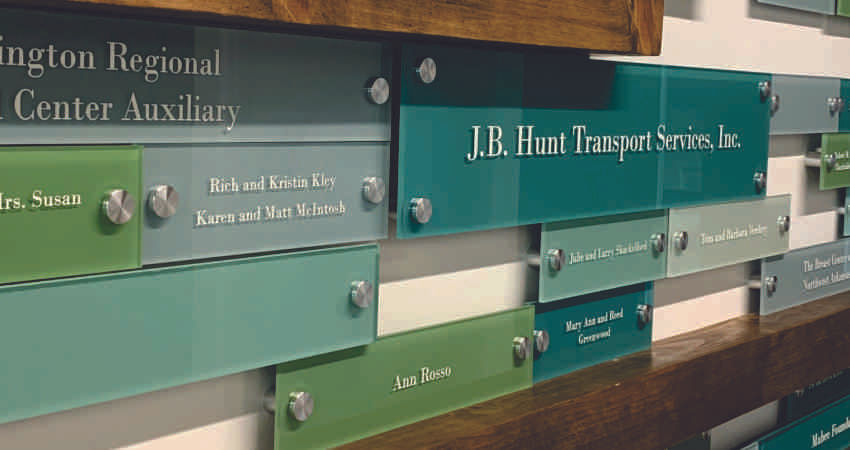
Glass and Acrylic: These materials offer a clean, modern aesthetic and open up incredible possibilities for playing with light and color. They're excellent for creating layered, sophisticated designs that feel both elegant and accessible.
The most successful donor walls often blend materials, such as wood panels with metal nameplates, to create a design rich in texture and visual interest. This combination can balance tradition with a modern sensibility, reflecting an organization that honors its past while looking toward the future.
From Static List to Strategic Asset
To truly nail what donors want, we have to see design as a strategic tool for retention and inspiration. A well-designed display becomes a quiet, perpetual fundraiser, communicating the value of philanthropy to every visitor, staff member, and potential new supporter who sees it. For a deeper dive, you can learn more about building donor loyalty and inspiring future gifts through this kind of thoughtful stewardship.
Your design should be both timeless and adaptable. Think about modular designs that let you easily add new names without having to rip everything out and start over. This practical approach ensures your recognition wall can grow alongside your organization, staying relevant and dynamic for years to come.
Ultimately, great design turns a list of supporters into a powerful narrative of shared achievement, inspiring everyone to become part of the story.
Using Personalization to Build Meaningful Connections
Personalization is what turns a generic thank-you into a deeply felt moment of acknowledgment. It’s the difference between a donor feeling like a name on a spreadsheet and feeling like a true partner in your mission. When you get right down to it, what donors really want from recognition is simple: they want to know you see them, not just their gift.
This goes so much deeper than just spelling a name correctly on a plaque. Real personalization shows you understand a donor’s unique connection to your cause. It’s about creating an interaction that feels human, genuine, and memorable—the kind that builds loyalty that can last a lifetime.
But meaningful personalization isn't a one-size-fits-all game. You need a tiered approach that respects every donor’s contribution level while making each person feel seen and valued.
Tiered Strategies for Authentic Personalization
A smart personalization plan meets donors exactly where they are, offering gestures that feel both appropriate and impactful for their level of giving. This keeps your efforts sustainable and ensures every single supporter feels genuinely appreciated.
For Emerging Supporters: Small, heartfelt gestures can have an outsized impact. A handwritten thank-you note from a staff member—or better yet, from someone who directly benefited from their gift—forges a powerful emotional link. Simply mentioning the specific project they funded shows you’re paying attention.
For Mid-Level Donors: At this stage, you can deepen the connection by tying their recognition directly to their passions. If they funded a specific piece of lab equipment, imagine their name on a small, tasteful plaque right on the machine. It makes their impact tangible and visible every single day.
For Major Philanthropists: These relationships often call for completely bespoke recognition experiences. This could mean naming a room, a wing, or an entire program in their honor. The key is to work with them to design a plan that reflects their personal story and values, ensuring their legacy is represented exactly as they envisioned it.
Personalization is proof that you’re listening. It confirms for a donor that their gift was received not just by an organization, but by people who share their passion and value their commitment.
From Names on a Wall to Stories of Impact
The most powerful form of personalization moves beyond acknowledgment and into storytelling. Why did they give? What part of your mission speaks to them? Sharing these stories—with their permission, of course—transforms a static list of names into a living, breathing narrative of community and shared purpose. You can learn more about how to boost donor recognition by turning names into compelling stories for supporters in our detailed guide.
Picture a donor wall with an integrated digital screen. A visitor touches a name, and a short video plays, showing the donor explaining why they believe so strongly in your work. This doesn't just honor the individual; it becomes a powerful tool to inspire new giving by showing potential supporters the real people who make your mission possible.
Connecting Personalization to Donor Retention
This focus on meaningful engagement is more critical than ever. Recent data from the Fundraising Effectiveness Project shows that while giving is consolidating among larger donors, overall donor retention rates are showing signs of stabilizing. What does that tell us? It suggests that organizations investing in authentic engagement—including personalized, visible recognition—are successfully holding onto their supporters.
For major donors, seeing their impact recognized prominently is a huge factor in their continued loyalty. That makes a quality, well-thought-out donor wall a critical retention tool, not just a design element.
Ultimately, personalization is your secret to building unbreakable bonds. It proves to donors that they are more than a transaction—they are the heart of your mission.
Making Your Recognition Timely and Visible
When it comes to thanking a donor, when and where you do it are just as important as how. A heartfelt thank you that arrives months late loses its punch. What donors really want is recognition that feels prompt, sincere, and has just the right amount of visibility.
This isn’t about a one-and-done plaque or a single mention at an event. Think of it as a “recognition journey”—a series of touchpoints that start the moment a gift is made and continue long after. It's a layered approach that builds momentum and deepens the relationship over time.
This way, you create a cohesive experience that constantly reminds a donor how much they matter. It proves their contribution wasn't just recorded, but truly felt.
The Recognition Journey in Action
The journey should always start with an immediate, private thank you. This could be a personal email from your CEO or a quick, heartfelt phone call from a board member. That instant acknowledgment is critical—it makes the donor feel seen right away.
After that initial contact, you can start planning the more public forms of recognition. This is where you have to strike that perfect balance between private gratitude and public acknowledgment.
Immediate Gratitude (First 48 Hours): A prompt, personal thank-you email or phone call confirms their gift was received and is already making a difference.
Tangible Acknowledgment (First Two Weeks): A handwritten note or a small, thoughtful token arrives, adding a personal touch that reinforces your gratitude.
Public Recognition (Campaign Milestones): This is the formal unveiling—their name on a donor wall, a social media shout-out, or a feature in your newsletter.
The goal is to make recognition a continuous conversation, not a one-time announcement. Each step, from a simple note to a formal event, builds on the last, strengthening the donor’s connection to your mission.
Finding the Right Balance of Visibility
Understanding the difference between public and private recognition is key. Public acknowledgment, like a name on a donor wall, speaks to a donor's desire for legacy and inspires others to give. It’s also a powerful way to use donor walls to inspire prospective donors and visitors.
Private gestures, on the other hand, are what build deep, personal bonds. They show sincere appreciation that goes far beyond the public eye.
This process flow shows how you can escalate personalization over time.

The journey from a simple note, to sharing a meaningful story, and finally to creating a memorable experience illustrates how recognition can evolve to forge much deeper connections.
Getting this right is more critical than ever. In the U.S., charitable giving recently hit an estimated $592.50 billion, and a massive 67% of that came from individuals. This trend suggests that existing donors are giving more, concentrating philanthropic impact among a dedicated group of supporters.
A thoughtful, quality recognition program signals that your organization takes these relationships seriously—a crucial factor for keeping the very people who are driving this growth.
By building a plan that integrates both physical and digital platforms, your message of gratitude becomes consistent and far-reaching, ensuring every donor is honored in a way that truly resonates with them.
Integrating Recognition Into Your Stewardship Program
It’s tempting to treat a new donor recognition wall like a finished project. You unveil it, celebrate it, and check it off the list. But that’s a huge missed opportunity.
Think of your wall not as a monument, but as the vibrant, physical heart of your entire stewardship program. It’s a dynamic asset you have to activate to get the real value out of it. When you stop seeing it as a static object and start using it as an active storytelling tool, you unlock its true power to build community, inspire action, and drive future giving.
Transforming a Wall Into a Living Asset
To bring your display to life, it needs to be more than just a landmark; it must become a destination. This is all about weaving it into the fabric of your organization’s daily life and making it a centerpiece of your narrative.
Ask yourself: does your wall just sit passively in a hallway, or is it a featured stop on every single tour? The goal is to make it an unavoidable and genuinely inspiring part of your organization's story.
Here are a few practical ways to get started:
Make it a Tour Highlight: Don’t just point to the wall—make it a mandatory and meaningful stop on all campus or facility tours. Use it as a backdrop to tell stories about specific donors and connect their generosity to the very room you're standing in.
Anchor Your Onboarding: When orienting new staff and board members, introduce them to your culture of philanthropy through the names on the wall. This builds a shared sense of gratitude and purpose right from day one.
Set the Stage for Events: Why not host receptions or campaign kickoffs right in front of the wall? It visually reinforces the powerful community of supporters behind you and creates an aspirational backdrop for fundraising appeals.
A donor wall is not a historical artifact; it's a current events bulletin. It should be a place where new stories of generosity are celebrated, not just where old ones are archived.
Creating Ongoing Engagement Opportunities
The best stewardship programs give donors reasons to come back, reconnect, and feel the ongoing relevance of their support. Your recognition wall is the perfect catalyst for this.
Consider launching an annual event specifically to honor and welcome the new donors whose names have been added. This ceremony creates a wonderful tradition, gives you a reason to invite key supporters back to your space, and shows prospective donors the deep respect you have for your community. It’s gratitude in action.
Answering Your Top Donor Recognition Questions
Even with the best game plan, real-world questions always pop up. Putting principles into practice means navigating everything from tight budgets to tricky donor requests. It’s one thing to know what donors want, but it's another to deliver it in the moment.
Think of this section as your field guide. We're tackling the most common questions and hurdles we hear about, with direct, no-fluff advice to help you build your recognition strategy with confidence.
How Often Should We Update Our Donor Recognition Wall?
There’s no single right answer here—it really depends on your wall’s design and your fundraising rhythm. But the key is to have a planned, consistent approach that you can communicate clearly to your donors.
Traditional, static walls are often updated annually. This timing usually lines up with the end of a big campaign or your fiscal year, giving you the perfect excuse to host an unveiling event and create a real moment of celebration.
Modular Systems: These walls are built for growth. You can add individual plaques or components as new major gifts come in, keeping the display current without a massive overhaul.
Digital Displays: This is where you get ultimate flexibility. Digital walls can be updated in real-time—instantly, weekly, or monthly—to reflect new support as it happens.
A great best practice is to set a clear, public policy. You might host an annual unveiling for your main architectural wall but use a digital screen in the lobby to feature new donors every month. This layered approach keeps your recognition feeling fresh and timely all year long.
At Stobbe Design, we believe a donor wall should do more than list names—it should tell your story. Our team works with you to create custom recognition displays that honor your supporters, reflect your mission, and inspire future giving. Learn how we can help you build a legacy of gratitude by visiting us at https://www.stobbedesign.com.

Comments