
Boost donor recognition, turning names into compelling stories for supporters
Updated: Dec 28, 2025
Let’s be honest, a bronze plaque with a list of names doesn't really move anyone. It's time to evolve donor recognition, turning names into compelling stories and transforming simple acknowledgments into a powerful storytelling engine. This is how you create an emotional connection that turns a one-time gift into a lasting partnership.
Moving Beyond Names on a donor recognition Wall
Traditional donor recognition often feels like an obligation—a static list of names etched onto a wall. While the intention is good, these displays do very little to communicate the why behind a gift. They honor the contribution but completely miss the chance to celebrate the contributor's personal journey, their motivation, and their passion for your cause.
Modern philanthropy demands something more dynamic. It's about moving from passive thanks to active, narrative-driven engagement.
This guide is all about how to make that critical shift. Instead of just listing names, you can weave a vibrant tapestry of stories that truly brings your mission to life. This approach not only validates your current supporters on a much deeper level but also builds an authentic, inspiring community around your work.
The Power of Narrative in Philanthropy
Stories are how we connect as humans; they're how we make sense of the world and find our place in it. When you share a donor's story, you're doing so much more than just saying "thank you."
You are:
Humanizing Generosity: A story gives a face and a voice to a donation. It’s a powerful reminder that behind every gift is a real person with a unique reason for giving.
Illustrating Impact: Narratives make the abstract concept of "impact" tangible. A story about how a scholarship changed a student's entire life is infinitely more powerful than a dry statistic about total funds raised.
Inspiring Future Giving: Prospective donors are moved by the stories of people just like them. When they see their own values reflected in the stories you share, they feel a personal connection and are far more likely to contribute.
By focusing on the narrative, you transform a donor wall from a historical record into a living testament to your community's collective spirit. It becomes a source of pride for current supporters and a compelling invitation to new ones.
This transformation isn't just about aesthetics; it's a strategic move. Authentically turning names into compelling stories deepens relationships, improves donor retention, and creates a powerful new asset for your fundraising. You’ll learn how to build an experience that honors your supporters and fuels new waves of generosity for years to come.
How to Uncover a Donor's Story
Behind every single donation, whether it's large or small, there's a personal motivation. A spark. It's the moment an individual's own life story connected with your organization's mission, and your job is to find it.
Uncovering a donor's story is an art. It takes genuine curiosity, empathy, and a real shift in how you think—moving away from transactional "thank yous" and toward relational discovery. This isn't an interrogation about their finances; it’s a real conversation about their values. When you focus on the why, the narrative you collect becomes the heart of your entire effort in donor recognition, turning names into compelling stories.
Setting the Stage for an Authentic Conversation
The environment you create and the approach you take are just as critical as the questions you ask. A donor who feels comfortable and respected is far more likely to open up. Your first job is to build trust and create a space where they feel truly heard, not just solicited.
Kick things off by expressing sincere gratitude for their support and clearly explaining the purpose of your chat. I like to frame it as an opportunity to better understand what inspires our most dedicated supporters, so we can share that same inspiration with the wider community. It's also crucial to assure them they will have complete control over how their story is used.
A donor interview should feel less like a formal meeting and more like a conversation over coffee. The goal is connection, not just information extraction. When you lead with authentic interest, donors will share authentic stories.
Mastering the art of conversation and active listening is a game-changer here. You might find these tips for conducting effective interviews helpful for drawing out those meaningful narratives. The core principles of creating a comfortable space and asking thoughtful questions are universal, whether you're hiring a new team member or connecting with a philanthropist.
Asking Questions That Reveal the Narrative
If you ask sterile, closed-ended questions, you're going to get sterile, boring answers. To get to the real heart of a story, you need to ask open-ended questions that invite reflection and personal anecdotes. It’s time to move beyond the "what" and "how much" of their donation and dive deep into the "who" and "why."
Think of your questions as gentle prompts, encouraging the donor to reflect on their personal journey and their connection to your cause. Avoid leading them to a specific answer, and don't be afraid of moments of silence. That quiet space often gives someone the room they need to recall a detail they otherwise would have missed.
Here are a few prompts I've found work well to get a conversation flowing:
Connecting to the Past: "Was there a specific moment or experience in your life that first made you passionate about this cause?"
Exploring Motivation: "What was happening in your life that prompted you to make your first gift to our organization?"
Focusing on Values: "When you think about the future, what is the one change you hope your support will help create?"
Understanding Impact: "Could you share a story about a time you saw our mission in action and felt proud to be a supporter?"
These kinds of questions don't have simple yes or no answers. They are designed to invite storytelling by tapping into memories, values, and emotions—all the essential ingredients for a narrative that truly resonates.
Capturing the Details That Matter
As you're talking, listen for more than just the main plot points. The magic is often in the small stuff. Pay close attention to the specific language they use, any emotional undertones, and the little details that bring a story to life.
Here’s what I always try to look for:
Key People: Did they mention a family member, a mentor, or a friend who influenced their philanthropic journey? Names and relationships add a powerful human element.
Sensory Details: Did they describe a specific sight, sound, or feeling connected to their experience with your cause? These details make a story immersive.
Powerful Quotes: Listen for that one phrase or sentence that perfectly sums up their motivation. Using a donor's own words is incredibly effective for adding authenticity.
Always, always ask for permission before you hit record, but I highly recommend recording audio to capture their exact words. I also take brief notes on key themes and emotional highlights to help guide the conversation and jog my memory later.
When you start approaching each donor not as a line item on a spreadsheet but as a unique story waiting to be told, you'll gather the rich, authentic material needed to honor them in a way that is truly meaningful.
Crafting Narratives That Truly Resonate
You’ve sat down with your donors, had those thoughtful conversations, and now you’re holding the raw material of their stories. This is where the real artistry begins—shaping those personal insights into a narrative that doesn't just inform, but truly moves people. A list of facts about someone's life isn't a story. A story has a structure, an emotional current, and a clear point that inspires others to join in.
The trick is finding the right framework. Not every donor’s story fits the same mold. Some are a classic hero's journey, where the donor overcame an obstacle to make their gift possible. Others work better as a chronicle of community impact, focusing on the collective power of many smaller contributions. The framework you choose is absolutely vital for donor recognition, turning names into compelling stories that stick with an audience long after they’ve walked away.
Choosing The Right Storytelling Framework
The best narrative structure always comes back to one question: what is my goal for this specific story? Are you hoping to inspire a first-time gift? Are you trying to showcase the long-term impact of an endowment? Answering that question first will guide your entire creative process and make sure the final story actually works.
For example, a story geared toward attracting new major donors might focus on a single, transformative gift and its dramatic ripple effect. On the other hand, a story for an annual giving campaign might highlight how a recurring, modest donation provided steady support for a critical program over many years. Both are incredibly powerful, but they need different shapes to land effectively.
This simple decision tree can help you visualize the choice and select the best framework for what you're trying to achieve.
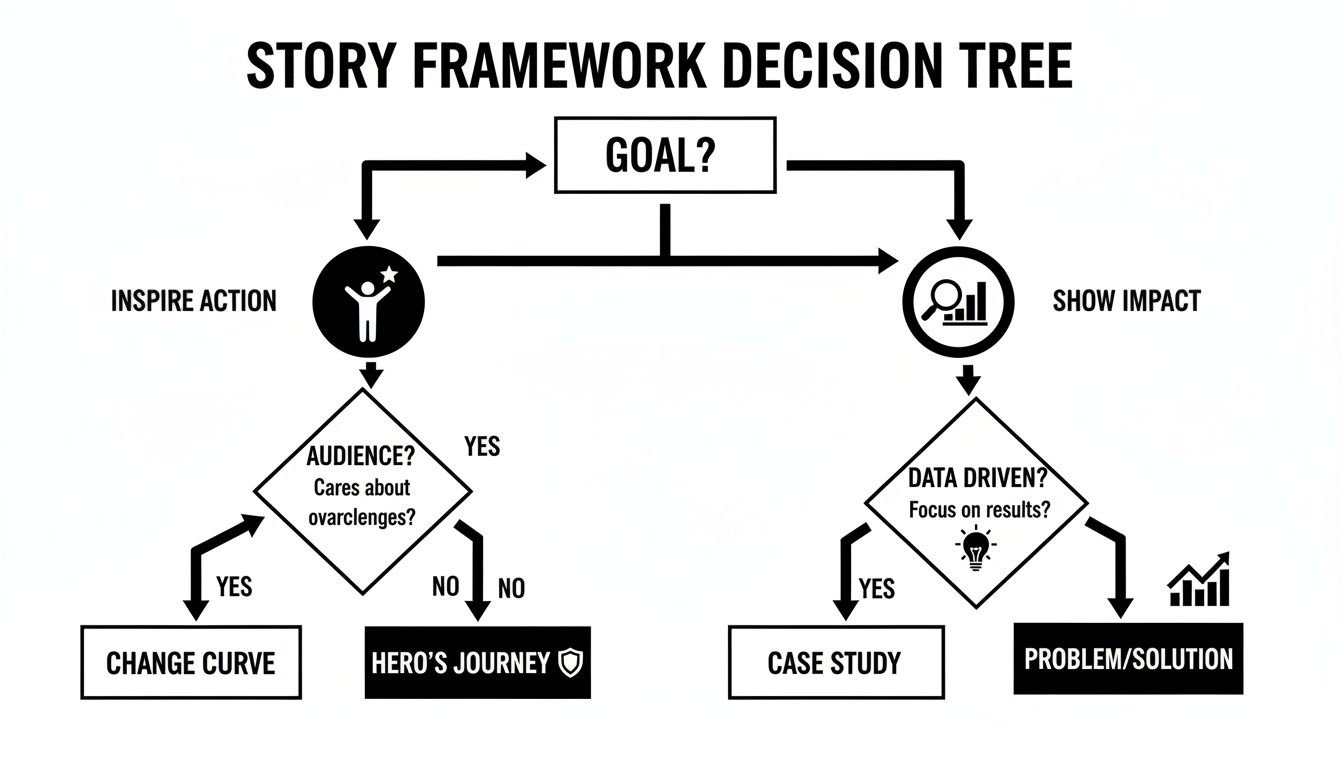
This visual guide really hammers home a fundamental point: aligning your narrative strategy with your desired outcome is the first, most important step. Whether you want to inspire action or demonstrate results, get clear on that first.
Building An Emotional Arc
Once you have a framework, it's time to build an emotional journey for your audience. A flat recitation of events won't capture anyone's heart. You need to create a narrative with a clear beginning, a compelling middle, and a satisfying, inspiring end. This is where you find the central theme.
Is the story about honoring a loved one’s memory? Is it about paying forward an opportunity the donor once received? Pinpoint that core emotional driver and build everything around it.
The Beginning: Introduce the donor and the "world before" their gift. What was the problem or opportunity that caught their attention?
The Middle: This is the heart of it all—the "why" you uncovered in your interview. Detail their motivation and personal connection.
The End: Show the impact. Connect the donor's action directly to a tangible, human outcome. This provides the emotional payoff and a clear call to action for everyone else.
A powerful story doesn't just present information; it creates an experience. By building a clear emotional arc, you guide the audience from understanding to feeling, and ultimately, to action.
To really nail this, especially in a digital format, think about the principles of mastering video script creation. It’s a great discipline for structuring any story with that essential beginning, middle, and end. You can also explore more in our guide on powerful storytelling strategies to enhance donor engagement.
The Importance Of Human-Centric Language
Finally, the words you choose are everything. You have to avoid internal jargon, complex metrics, and overly formal language. The goal is to make the story feel personal and accessible, whether it’s being read by a board member or a first-time visitor off the street. Use simple, direct language that speaks from the heart.
The challenge of keeping donors engaged is real. Just 19% of first-time donors give again, a statistic that highlights how crucial it is to turn those initial names into compelling retention stories. With $592.5 billion in U.S. giving expected for 2024, holding onto donors is a massive hurdle, and 33% of nonprofits point to limited stewardship resources as a key problem.
Crafting these resonant narratives is a direct and powerful way to combat that churn. It’s why every single word matters in making donors feel seen, valued, and connected long after their first gift.
Designing Your Story-Driven Recognition Display
Once you’ve collected those powerful donor stories, the real fun begins: bringing them to life visually. The right design can take a good story and make it unforgettable, while the wrong one can make it fall flat.
This is where you move beyond simple plaques and into the world of experiential design. Every single choice—from the grain of the wood to the font on a screen—shapes how people feel when they interact with the display. The goal isn't just to list names; it's to create an installation that pulls people in, sparks conversations, and truly honors the generous individuals behind the gifts.
Balancing Aesthetics, Budget, and Future Growth
A beautiful design is only great if it’s sustainable. It’s absolutely critical to balance your creative vision with a realistic budget and a solid plan for the future. One of the most common mistakes I see is a stunning wall that is completely full the day it’s installed, with no room to add the next big donor.
The best way to avoid this is with a modular design. This approach uses individual components—like tiles, plaques, or even digital profiles—that you can easily add over time. Your display becomes a living, breathing installation instead of a static monument.
Here’s a quick checklist to plan for sustainability:
Project Your Future Needs: Try to estimate your donor growth over the next five or ten years. Design the display with that capacity in mind from day one.
Factor in Maintenance: Digital screens need software updates and tech support. Physical displays need cleaning and the occasional repair. Make sure these ongoing costs are in your budget.
Collaborate Early: Get your designers, fabricators, and development team in the same room from the very beginning. This collaboration ensures the final product isn't just beautiful, but also practical, on-budget, and a powerful stewardship tool.
Amplifying Your Donor Stories Beyond the Wall
A beautifully designed recognition display is a powerful centerpiece, but its impact shouldn't die in a single hallway. Think of your story-driven wall not as the final destination, but as a content engine. The rich, authentic narratives you’ve worked so hard to gather are pure gold—assets that can fuel your communications everywhere, making sure your message of gratitude and impact is heard far and wide.
This is what modern donor recognition is all about: turning names into compelling stories. When you repurpose these narratives, you create a cohesive message that constantly reinforces your mission and celebrates the people who make it possible. The story featured on the wall today can become the heart of next month's email newsletter or the most engaging post on your social feed.
Creating a Content Ecosystem
Your donor stories should ripple outward, creating a consistent and inspiring narrative wherever someone interacts with your organization. This multi-channel approach maximizes the return on your storytelling efforts and keeps your community connected. The goal is to make every touchpoint an opportunity to reinforce your mission through the authentic voices of your supporters.
Try mapping out a simple content calendar to plan how and where each story will be shared.
Social Media Campaigns: A compelling photo of a donor paired with a powerful quote and a snippet of their story is incredibly effective on platforms like Instagram and LinkedIn.
Email Newsletters: Dedicate a recurring section to a "Donor Spotlight," sharing a more detailed version of their story and linking back to a full feature on your blog.
Annual Reports: It's time to move beyond sterile financial charts and endless lists of names. Weave two or three of your most powerful donor stories throughout your annual report to bring the year's achievements to life.
Fueling Fundraising and Corporate Partnerships
These authentic stories aren't just for stewardship; they are among your most potent fundraising tools. When you're making a direct fundraising appeal, including a short, relatable story about a current donor can dramatically boost its effectiveness. It shifts the focus from a transactional request to a heartfelt invitation to join a community of passionate, like-minded people.
This approach is also incredibly effective for strengthening corporate partnerships. Sharing stories of employee giving or the impact of a corporate grant provides tangible proof of a company's community investment. This is especially vital in today's philanthropic environment.
Corporate giving is projected to climb to $44.4 billion in 2025. A huge piece of this involves matching gift programs, with 51% of Russell 1000 companies now offering them. Yet, billions in matching funds go unclaimed each year, often because employees just don't have a compelling, personal reason to participate. By showcasing the stories of their colleagues, you provide that missing spark and make the case for giving undeniable. You can read the full research about the 2025 philanthropic landscape from Business Initiative to get a better handle on these trends.
As you collect stories, run through a quick mental checklist:
Direct Mail Appeals: Could this story be the emotional hook for our next mailing?
Grant Proposals: Can this narrative provide a human-centric example of our program's success?
Corporate Partner Reports: How can we use this story to thank our partners and encourage their continued support?
By systematically amplifying these narratives, you create a powerful feedback loop where recognition inspires new giving, which in turn creates new stories to be told.
Navigating the Ethics of Donor Storytelling
When you share someone’s story, you’re handling something deeply personal. It’s a profound responsibility, not just another marketing tactic. Before you even think about turning donor names into narratives, you have to build a framework of trust, transparency, and respect.
This ethical foundation is what makes the whole process work. It ensures you’re honoring the person behind the gift, not just using their story for your own ends.
The absolute cornerstone of ethical storytelling is informed consent. I'm not talking about a quick checkbox on a form, either. This means sitting down and having a real conversation about where and how their story will be shared—whether it’s on a physical wall, in an annual report, or across your social media channels. The donor must always have the right to review, approve, and even ask for changes before anything goes public.
True partnership in storytelling means the donor never feels like they've lost control of their own narrative. Your role is to be a steward of their story, and that requires their enthusiastic and ongoing permission.
When you approach it this way, the experience shifts from feeling like an information grab to a genuine, collaborative celebration of their generosity.
Securing Consent and Protecting Privacy
A formal consent agreement is non-negotiable. It should be written in simple, accessible language—skip the dense legal jargon that no one understands.
Your consent form needs to clearly lay out a few key things:
Specific Uses: Get granular. Detail every potential channel, from the website and print materials to social media posts.
Duration: Be upfront about how long you plan to use their story. Is it for a specific campaign or indefinitely?
Anonymity Options: Give them choices. Let them decide if they want to be recognized with their full name, first name only, or completely anonymously.
Right to Withdraw: Make it crystal clear that they can change their mind and revoke consent at any time, no questions asked.
Protecting privacy is just as critical. Never share sensitive personal details without getting explicit permission first. For those who want to remain anonymous, the story isn't lost. You can simply shift the focus to the impact of their gift, framing it as a success story made possible by a visionary, unnamed supporter.
A great way to formalize these boundaries is by establishing clear guidelines in your organization's policies. We actually walk through how to do this in our guide on creating gift acceptance policies for nonprofits.
Fostering Inclusivity and Respect
Finally, any ethical recognition program has to be inclusive. Storytelling is a fantastic opportunity to break away from the traditional, wealth-based hierarchy of giving and celebrate generosity at every single level.
Make a point to actively seek out and share stories from your monthly givers, your most dedicated volunteers, and even first-time donors. Put their stories right alongside those of your major philanthropists.
This approach sends a powerful message: every contribution matters. It shows that your community is built on a shared passion for the mission, not just the size of a check. When your recognition efforts reflect the diverse and vibrant community you actually serve, you strengthen trust and inspire generosity from every corner.
Of course. Here is the rewritten section, crafted to sound completely human-written and natural, following the provided style guide.
Tackling Your Donor Storytelling Questions
As soon as you start moving from a simple list of names to a wall of stories, practical questions are bound to pop up. It's only natural. How do you handle those unique situations while making sure every single donor feels truly seen and honored? Let's walk through some of the most common concerns we hear from organizations just like yours.
One of the first hurdles is often how to recognize anonymous donors. The key here is to pivot. Instead of focusing on the person, you shine a bright light on the incredible impact of their gift. You can frame the narrative around the project they made possible, using language like, "Thanks to the vision of a generous anonymous supporter..." This beautifully honors the spirit of their contribution while respecting their wish for privacy.
Then there’s the donor who’s a bit shy about sharing personal details. Respect is everything in this situation; you never want to pressure anyone. We always suggest offering different levels of sharing. Maybe they’d be comfortable with just their name alongside a powerful quote about why they give. Or perhaps they’d prefer a story that focuses solely on their motivation, without revealing private information.
The golden rule? Always, always give them the final review and approval before anything goes public. It builds trust and ensures they feel great about how their story is told.
But Can We Afford This? Making Storytelling Scalable
"This all sounds great, but we're a small shop with a tight budget." We hear this all the time, and the good news is that powerful storytelling is incredibly scalable. It doesn't require a massive investment. The real magic is in the narrative itself, not the price tag of the display.
You can start small with high-impact, low-cost ideas that are often digital-first:
Social Media Spotlight: Launch a "Donor Story of the Week" on your social channels. All it takes is a simple photo and a thoughtfully written caption to make someone feel celebrated.
A Home on Your Website: Create a dedicated, easy-to-update page on your website to house an archive of these stories. It becomes a living library of generosity.
Elegant Printed Pieces: Instead of a costly physical installation right away, think about a high-quality printed banner or a beautifully designed book of donor stories placed in your lobby or waiting area.
At the end of the day, your most important investment is the time you take to listen to your donors and craft an authentic story. A heartfelt narrative shared on a simple platform will always be more moving than the most elaborate, impersonal display.
Ready to transform your recognition efforts from a simple list into a legacy of stories? Stobbe Design specializes in creating custom donor recognition walls that celebrate generosity and inspire future giving. Let us help you tell your story. https://www.stobbedesign.com


Comments