
A Practical Guide to Creating Your Donor Wall with Tiers Level
Creating a tiered donor wall is far more than just listing names on a plaque. It’s a thoughtful process of building a visual story of generosity—one that genuinely moves people and inspires future giving.
The real heart of it is setting meaningful contribution thresholds and naming conventions that feel authentic to your organization's mission. The goal is to design a recognition system that doesn't just thank donors, but actively encourages them to deepen their support.
The Strategic Power of a Tiered Donor Wall
Let's move past the idea of dusty old plaques. A modern, tiered donor wall is one of the most dynamic fundraising and community-building tools you have. It's a living testament to your community's generosity and a powerful way to encourage ongoing support.
The magic is in the psychology. A tiered system creates a clear, aspirational path for donors, showing them how they can grow their engagement and amplify their impact over time.

I'll walk you through the whole journey, from setting gift levels and crafting a compelling design to picking the right materials and keeping donors engaged long after the big reveal. You'll get the framework you need to create a donor wall that truly tells your story and propels your mission forward.
More Than Just a List of Names
A truly successful donor wall does a few critical things at once. Think of it less as a static thank-you note and more as a living, breathing part of your organization's culture.
Honors Generosity: At its core, the wall publicly celebrates the people, families, and companies that make your work happen. It’s a permanent thank you.
Inspires New Giving: It provides a very real, tangible motivation for both current and potential donors. When people see the names of their peers and community leaders, it sparks a desire to join in, creating a powerful cycle of philanthropy.
Tells Your Story: Everything from the design and materials to the names you give your tiers reinforces your brand and mission. It all comes together to tell a story of shared values and collective achievement.
Grasping these functions is the first step. The strategic value of a well-planned wall is huge; it can directly boost fundraising and inspire generosity for years to come. And if you're looking for ways to feature your new wall, you can find some fantastic nonprofit fundraising event ideas to draw inspiration from.
Setting Gift Thresholds and Naming Your Tiers
Figuring out the financial levels for your donor wall is where hard data meets human psychology. Your goal is to land on gift thresholds that feel aspirational enough to encourage larger gifts but also achievable enough that you don't scare off potential supporters. It's a delicate balance, but getting it right is the key to creating a tiered donor wall that truly motivates giving.
This simple hierarchy shows how a powerful donor wall connects everything back to your mission, bringing your community and donors together in a visual story of support.
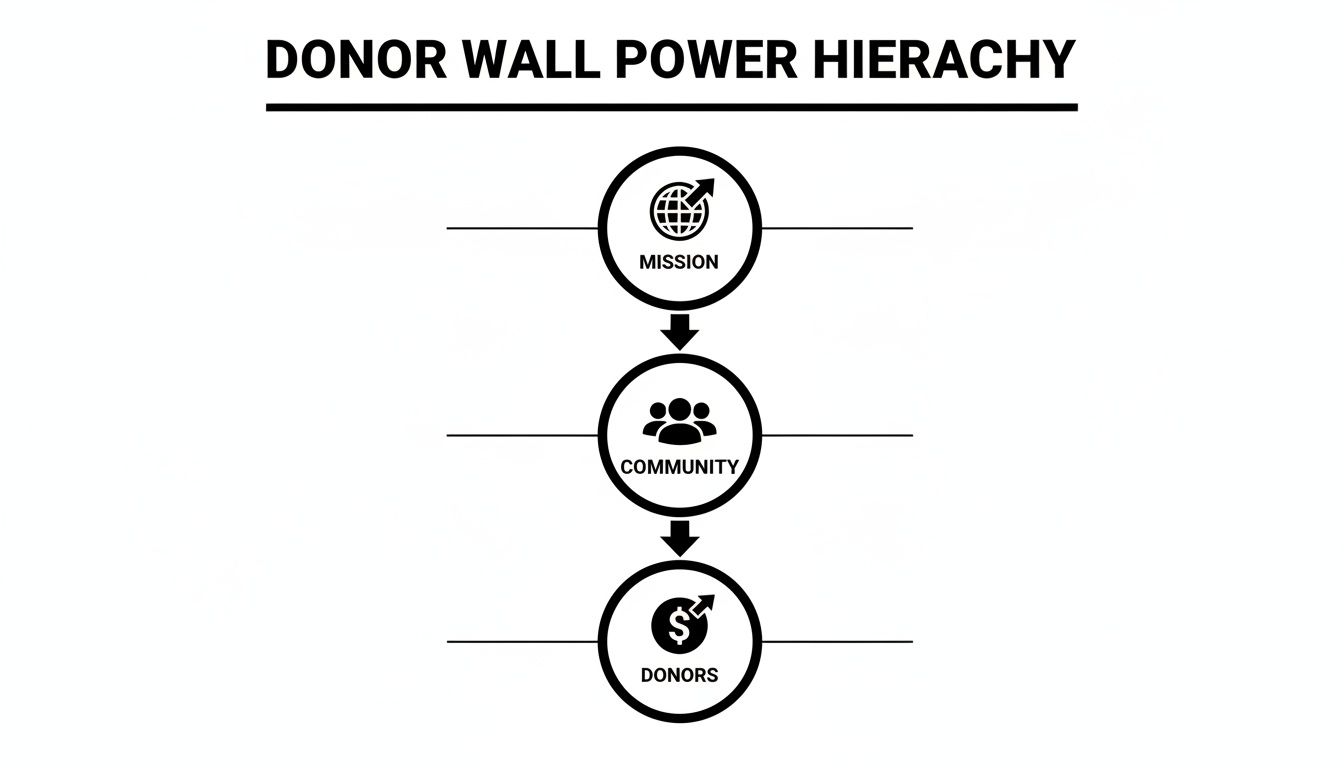
As you can see, a successful wall is built on the foundation of your mission. This inspires a community, which in turn empowers individual donors to give.
Analyzing Your Giving Data to Set Thresholds
Before you even think about picking numbers out of thin air, you need to dig into your own fundraising history. This data is your single most valuable asset for setting tiers that are both realistic and effective. Your donor database holds all the answers.
Start by running a report on all donations. Segment that data to find the patterns:
Average Gift Size: What's the most common donation amount you receive? This is often a great starting point for your entry-level tier.
Median Gift Size: This number gives you the true midpoint of your donations, helping you understand what a "typical" gift really looks like.
Gift Clustering: Look for natural groupings. You'll probably see that a lot of people give around $100, $500, or $1,000. These clusters are perfect candidates for your tier thresholds.
This kind of analysis prevents you from making a rookie mistake, like setting your lowest tier at $1,000 when most of your community gives around $100. It grounds your entire structure in reality.
A common pitfall is aiming too high with the entry-level tier. This can alienate a huge chunk of your loyal supporters. It's always better to create an inclusive first step and let people build momentum from there.
A data-first approach ensures your tiers are actually relevant to your donors. You’ll likely find that the right levels for a capital campaign wall are quite different from a cumulative lifetime giving wall.
The Psychology of Tiered Giving
Setting your tiers isn't just a math problem—it's about motivation. A well-designed system taps into a psychological principle called anchoring. When a donor sees a range of giving options, their idea of what makes a "generous" gift is influenced by the highest levels you present.
Crafting Creative and Mission-Driven Tier Names
This is where you can have some fun. Ditching the generic "Gold, Silver, Bronze" is one of the easiest and most impactful changes you can make. The names you choose for your tiers are a golden opportunity to reinforce your mission and make donors feel like they're part of something truly special.
The language should echo your organization's identity and resonate with your supporters. Below are a few ideas to get you thinking.
Sample Donor Tier Structures and Naming Ideas
This table shows three different ways to approach tier naming, from the classic to the creative. Think about which style best reflects your organization's voice and mission.
Tier Level | Example 1: Classic Precious Metals | Example 2: Mission-Themed (e.g., Hospital) | Example 3: Impact-Based (e.g., School) |
|---|---|---|---|
Tier 5 (Highest) | Platinum Circle | Visionary Partner | Founder's Society |
Tier 4 | Gold Society | Circle of Hope | Chancellor's Circle |
Tier 3 | Silver Benefactors | Healing Hands | Dean's List |
Tier 2 | Bronze Patrons | Community Champions | Scholars' Guild |
Tier 1 (Lowest) | Friends of the Foundation | Caring Givers | Campus Friends |
Choosing names that tell a story transforms a simple transaction into a meaningful partnership. It helps donors see themselves not just as check-writers, but as essential partners in your work. It’s a simple change, but it elevates the entire experience of giving.
Designing a Donor Wall That Tells Your Story
A donor wall should be so much more than a list of names. Think of it as a centerpiece—a landmark within your space that tells a compelling story of collective impact. Getting the design right is what transforms a simple display into a powerful, permanent installation.
With your giving thresholds already established, it's time to focus on the visual elements. This is where your donor wall truly comes to life.
The journey doesn’t start with colors or fonts. It starts with location. Where you place your wall has a massive effect on its influence. A display tucked away down a quiet hallway has almost zero impact compared to one in a bustling lobby, where it’s seen daily by staff, visitors, and potential new supporters.
Location and Visibility: The Foundation of Impact
The old real estate mantra applies here: location, location, location. The sweet spot for your donor wall is an area with high foot traffic and excellent visibility, like a main entryway, a central atrium, or near a popular gathering space. This ensures it serves as a constant, gentle reminder of the community that makes your work possible.
Take a moment to consider the sightlines from key points in the room. Does the wall catch your eye the second you walk in? Is it well-lit? These aren't minor details; they determine whether your wall is an afterthought or a true focal point.
A prominent location also unlocks storytelling opportunities. It becomes a natural backdrop for events, a conversation starter during tours, and a genuine point of pride for the very donors whose names are displayed.
Establishing a Clear Visual Hierarchy
Once you've nailed down the perfect spot, the next challenge is creating a design that gracefully represents your giving tiers. This is where visual hierarchy comes into play. The goal is to give top-tier donors more prominence without making lower-level supporters feel insignificant.
Here are a few proven techniques I've seen work time and again:
Size and Scale: This is the most direct approach. The names or plaques for your highest-level donors are physically larger than those in lower tiers. The difference should be noticeable but still elegant.
Placement: Position your most prestigious tiers at the top or in the center of the wall, where the eye is naturally drawn. This instantly reinforces their significance.
Material Variation: Using a different, more premium material—like polished brass for the top tier and brushed aluminum for the others—creates a subtle yet powerful distinction.
Your design must communicate value at every single level. While top donors deserve special recognition, the wall's overall message should be one of inclusive gratitude, celebrating every contribution that helped you reach your goal.
A smart hierarchy makes the design intuitive. A visitor should be able to understand the structure of your giving levels at a glance, purely from the visual cues.
Weaving in Your Brand Identity
Your donor wall is a major piece of brand communication. It should feel like a natural extension of your organization's identity, not some generic add-on. The best way to do this is by thoughtfully integrating your existing brand elements.
Lean on your organization's color palette and typography to create a cohesive look. The fonts need to be legible from a distance and align with the style used in your other marketing materials. This consistency reinforces brand recognition and lends an air of professionalism and permanence to the whole installation.
This is also a prime opportunity to weave in your mission statement or key impact statistics. A well-placed quote or a powerful number can add incredible emotional depth and context, turning the wall from a list of names into a testament to what those donors have accomplished together. Learning about powerful storytelling strategies can enhance donor engagement and turn your wall into a dynamic narrative.
Choosing Materials That Reflect Your Brand
The materials you choose for your donor wall do so much more than just hold names. They send a powerful, unspoken message about your organization’s brand, its values, and its staying power. This choice is a tangible reflection of your identity.
Think about it: a sleek, modern hospital is going to have a very different feel than a historic university or a grassroots environmental group. Your materials are the physical translation of your mission into a lasting tribute, and they set the tone for the entire installation.
Aligning Materials with Your Organization's Identity
First things first, what story are you trying to tell?
If you're a nonprofit focused on sustainability, materials like reclaimed wood or bamboo feel authentic and on-brand. But if you’re a cutting-edge medical research facility, something like brushed aluminum, back-lit acrylic, or even a fully digital display might better capture your innovative spirit.
Here’s a quick breakdown of common material families and the personalities they often represent:
Traditional and Timeless: Think engraved brass, polished bronze, and rich mahogany. These evoke a sense of history, prestige, and stability. They’re a perfect fit for established institutions like universities, museums, and century-old foundations.
Modern and Clean: Sleek acrylic, brushed metals like aluminum and stainless steel, and etched glass create a contemporary, sophisticated feel. These are excellent choices for healthcare facilities, tech-focused foundations, and modern corporate headquarters.
Natural and Warm: Wood options—from light maple to dark walnut—and stone elements like slate or granite can feel grounded, welcoming, and organic. They are ideal for community centers, environmental groups, and organizations with a wellness focus.
The most successful donor walls are those where the materials feel like a natural extension of the building's existing architecture and the organization's brand. The goal is seamless integration, not a jarring addition.
It’s always a good idea to get your hands on physical samples. Seeing how different textures and finishes interact with your actual lighting and decor is invaluable. You can even create a material board for interior design to help everyone visualize how all the elements will come together in the final piece.
Donor Wall Material Comparison Guide
Choosing the right material involves balancing aesthetics with practicalities like cost and upkeep. This guide compares some of the most popular options to help you make an informed decision that aligns with your organization's needs and brand.
Material | Aesthetic | Average Cost | Durability | Maintenance Level |
|---|---|---|---|---|
Engraved Brass | Traditional, Prestigious | High | Very High | High (Requires Polishing) |
Etched Glass | Elegant, Airy | High | High | Medium (Shows Fingerprints) |
Brushed Aluminum | Modern, Sleek | Medium | Very High | Low |
Acrylic | Contemporary, Versatile | Low-Medium | Medium | Low (Can Scratch) |
Wood (Maple, Oak) | Warm, Natural | Medium-High | High | Medium (Requires Dusting/Care) |
Ultimately, choosing your materials is all about finding that sweet spot where your brand story, your physical space, and your practical budget all intersect. By thoughtfully considering these elements, you can create a beautiful and enduring donor wall that truly honors your supporters for years to come.
Keeping Your Donor Wall Alive and Relevant
The big reveal of your donor wall is a fantastic moment, but it’s just the starting line. A donor wall isn't a static piece of art to be admired from afar; its real power is unlocked when it becomes a living, breathing part of how you engage with your community. The last thing you want is for it to fade into the background.
To pull this off, your organization needs a crystal-clear donor recognition policy. This document is your North Star. It removes any guesswork and ensures every supporter is treated with fairness and consistency. Think of it as your internal rulebook for this very public display of gratitude.
Your Donor Recognition Policy: The Foundation of Fairness
A well-defined policy is your best friend when it comes to preventing misunderstandings. This needs to be a formal, written document that your leadership has signed off on, spelling out the nitty-gritty of your recognition program. It creates a transparent, predictable process for both your team and your donors.
Your policy should tackle the tough questions before they even come up:
Listing Protocols: How will names actually appear? Will it be "John and Jane Smith," "The Smith Family," or "The John and Jane Smith Family Foundation"? Whatever you choose, stick with it. Consistency is everything.
Inclusion Deadlines: What are the hard cutoff dates for getting on the wall, especially for annual giving campaigns? Communicating these dates clearly saves a lot of headaches and disappointed calls later.
Update Cadence: How often will the wall be updated? Specify whether you’ll be adding names annually, quarterly, or on a rolling basis. This is especially critical for physical installations where fabrication takes time and money.
Proofing Process: Who gives the final sign-off on names before they’re sent to the fabricator? I always recommend a multi-step verification process. A simple typo can be costly and, frankly, embarrassing.
Getting this framework right ensures that when you're creating your donor wall with tiers level, the whole operation runs smoothly and equitably. It turns a potentially chaotic task into a well-oiled machine.
Make the Wall a Destination, Not Just a Display
With a solid policy in your back pocket, you can shift your focus to the fun part: keeping the wall central to your fundraising and stewardship efforts. It should be more than a list; it should be a hub of activity.
An unveiling ceremony is the perfect way to kick things off. Make it a real celebration. Invite the donors being honored, your board, and key community members. This generates that initial buzz and shows everyone just how much you value their support.
A donor wall’s relevance is directly tied to how often you talk about it. Don't let it become a silent fixture. Weave it into your storytelling to maximize its impact on future giving.
After the launch, don't let the momentum die. Weave the wall into your regular communications. Feature a "Donor of the Month" from the wall in your newsletter, sharing a quick story about their connection to your cause. Snap high-quality photos of the wall and use them as a backdrop for social media posts celebrating your organization's impact. These small, consistent actions keep reminding your audience of the amazing community that fuels your mission.
A Practical Maintenance Checklist
Finally, a pristine wall shows that you care. It reflects a professional and grateful organization. Your maintenance plan will depend entirely on the materials you chose.
Here’s a simple checklist to keep your installation looking sharp:
Regular Cleaning: Schedule weekly or bi-weekly dusting and cleaning. Glass and acrylic are fingerprint magnets, while brass might need a good polish every so often.
Lighting Check: Once a month, take a look at all the lighting. A burnt-out bulb can make even the most beautiful display look neglected.
Damage Assessment: Do a quarterly walk-through to look for any scratches, chips, or peeling vinyl. Catching minor issues early prevents them from becoming big, expensive problems.
Content Audit (for Digital): If you have a digital display, do a quarterly content review. Make sure all the links work, videos play correctly, and donor information is still current.
Common Questions About Creating a Tiered Donor Wall
As you get into the nitty-gritty of planning your donor wall, a few practical questions always pop up. Thinking through these common scenarios ahead of time is one of the best things you can do for your project. It saves you from last-minute scrambles and, more importantly, keeps your relationships with donors strong and respectful.
Let's tackle some of the most frequent hurdles.
How Should We Handle Anonymous Donation Requests?
It happens more often than you'd think: a major donor makes a transformative gift and asks to remain anonymous. The first, and most critical, rule is simple: honor their wishes without question. This should be baked right into your donor recognition policy.
So, what do you put on the wall? Instead of a name, a simple, elegant phrase like "An Anonymous Benefactor" or "A Friend of the Community" works perfectly. This acknowledges the gift's magnitude and fills the physical space in the design, all while respecting the donor's privacy. The anonymous listing should still be placed in the correct giving tier to maintain the wall's visual and hierarchical integrity.
A donor's comfort and trust are paramount. Having a graceful, pre-planned way to handle anonymity shows respect and professionalism, strengthening your relationship even when their name isn't public.
What's the Best Way to Manage Updates?
For a physical wall, adding new names can feel like a logistical nightmare if you haven't planned for it. The smartest move is to design for growth from day one. This means choosing a fabrication method that makes additions easy and cost-effective.
Individual Plaques: This is often the most flexible route. Using separate, uniform plaques for each name means you can simply order and install a new one whenever needed.
Modular Systems: Think of these as building blocks. Some designs use panels or sections that can be added over time, allowing the entire wall to expand without looking like an afterthought.
Vinyl Lettering: If your wall is made of acrylic or glass, adding names with vinyl is a great option. It’s affordable and relatively simple to apply new names annually without re-fabricating whole sections.
The key is to decide on a regular update schedule—once a year is typical—and let your donors know the timeline. This manages expectations beautifully and avoids any disappointment if a name doesn't appear the day after a gift is made.
When Is a Digital Donor Wall a Better Choice?
A traditional, physical wall has a wonderful sense of permanence, but sometimes a digital display is just a much smarter investment. If your organization is growing fast and you anticipate a steady stream of new donors, a digital wall will save you a world of hassle and expense when it comes to updates.
It’s probably time to go digital if:
You run multiple campaigns each year and need to recognize new donors frequently.
You want to tell richer stories with dynamic content like photos, donor profiles, or videos.
Your physical space is tight; a single screen can cycle through thousands of names.
A digital solution transforms your recognition display from a static list into an engaging storytelling platform. It’s easily the superior choice when flexibility and constant updates are top priorities in your strategy for creating your donor wall with tiers level. This modern approach ensures your recognition efforts always feel current and alive.
At Stobbe Design, we specialize in crafting custom donor recognition walls that tell your organization's unique story. From timeless physical installations to dynamic digital displays, we manage every detail from concept to installation, ensuring a beautiful result that honors your supporters and inspires future giving. Explore our portfolio and start your project today.

Comments