
Using Donor Walls to Inspire Prospective Donors and Visitors
A well-designed donor wall is so much more than a fancy thank-you note. Think of it as your most dedicated fundraiser, working for you 24/7. It taps into two very human desires—social proof and the wish for a legacy—to turn a static plaque into a dynamic tool that inspires everyone who sees it, from brand-new prospects to your most loyal supporters.
The Strategic Power of a Donor Wall
It’s time to stop thinking of donor walls as just a list of names. The most effective displays are carefully planned, strategic assets that serve as a constant, physical testament to your mission and the incredible community that fuels it.
When a visitor walks into your building and sees a beautifully crafted wall, they don't just read names. They see a story of collective impact.
This visual proof of support is a powerful motivator. It creates a sense of belonging and shows prospects that people just like them believe in what you do. For someone on the fence, that validation can be the nudge that moves them from quiet interest to active support.
More Than Just Gratitude
A great donor wall does several jobs at once. It’s a powerful way to thank past generosity while actively planting the seeds for future gifts.
This is where strategy comes in. The wall becomes a central part of your fundraising ecosystem, as this breakdown shows.
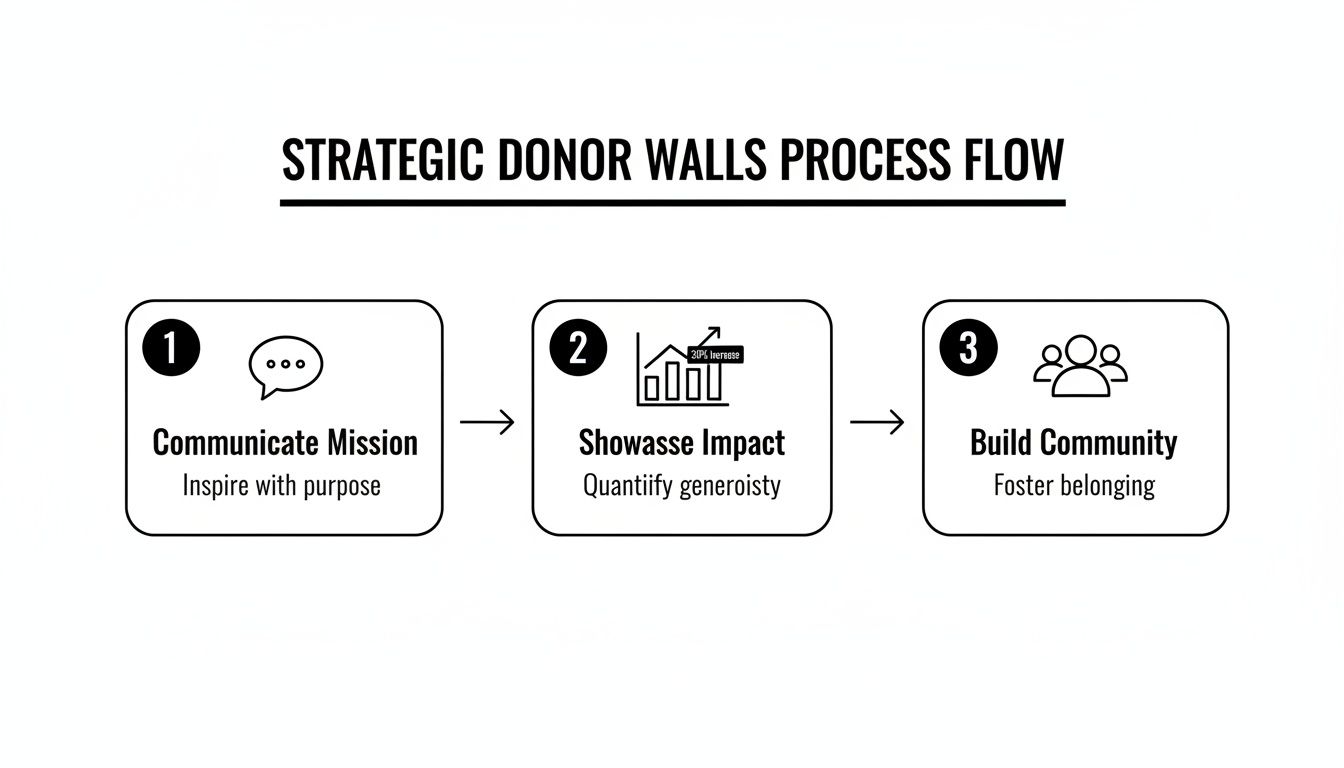
As you can see, these elements feed into one another. They build a compelling narrative that goes far beyond simple recognition to foster a genuine, organization-wide culture of philanthropy.
The real magic here is turning an act of gratitude into a perpetual fundraising engine. It’s not a historical record of past donations; it’s a living document that communicates your values and invites others to become part of the story.
A donor wall shouldn't be an afterthought or the final step in a campaign. It should be an integral part of your fundraising strategy from day one, designed to tell a story that resonates long after the ribbon-cutting ceremony.
Building a Lasting Legacy
At its core, a donor wall visualizes the idea of legacy. It shows that every contribution, no matter the size, leaves a lasting mark on your organization and the community you serve.
For a prospective donor, seeing the names of respected peers or community leaders on that wall can be incredibly influential. It sends a clear signal that your organization is a stable, trustworthy institution worthy of a significant investment.
And that foundation of trust is absolutely essential for securing the major gifts that will ensure your long-term sustainability and growth.
Crafting a Compelling Narrative Through Design
A donor wall should do more than just list names—it needs to tell a powerful story. Think of it as a physical manifestation of your mission, turning abstract goals into a tangible, visual narrative that genuinely connects with visitors. The design itself becomes the storyteller.
This is where smart design stops being about just aesthetics and starts becoming a strategic fundraising tool. Every single choice, from the type of wood you pick to the angle of a spotlight, adds another layer to your message. Your goal is to create an experience that makes people pause, reflect, and feel a real connection to your cause.
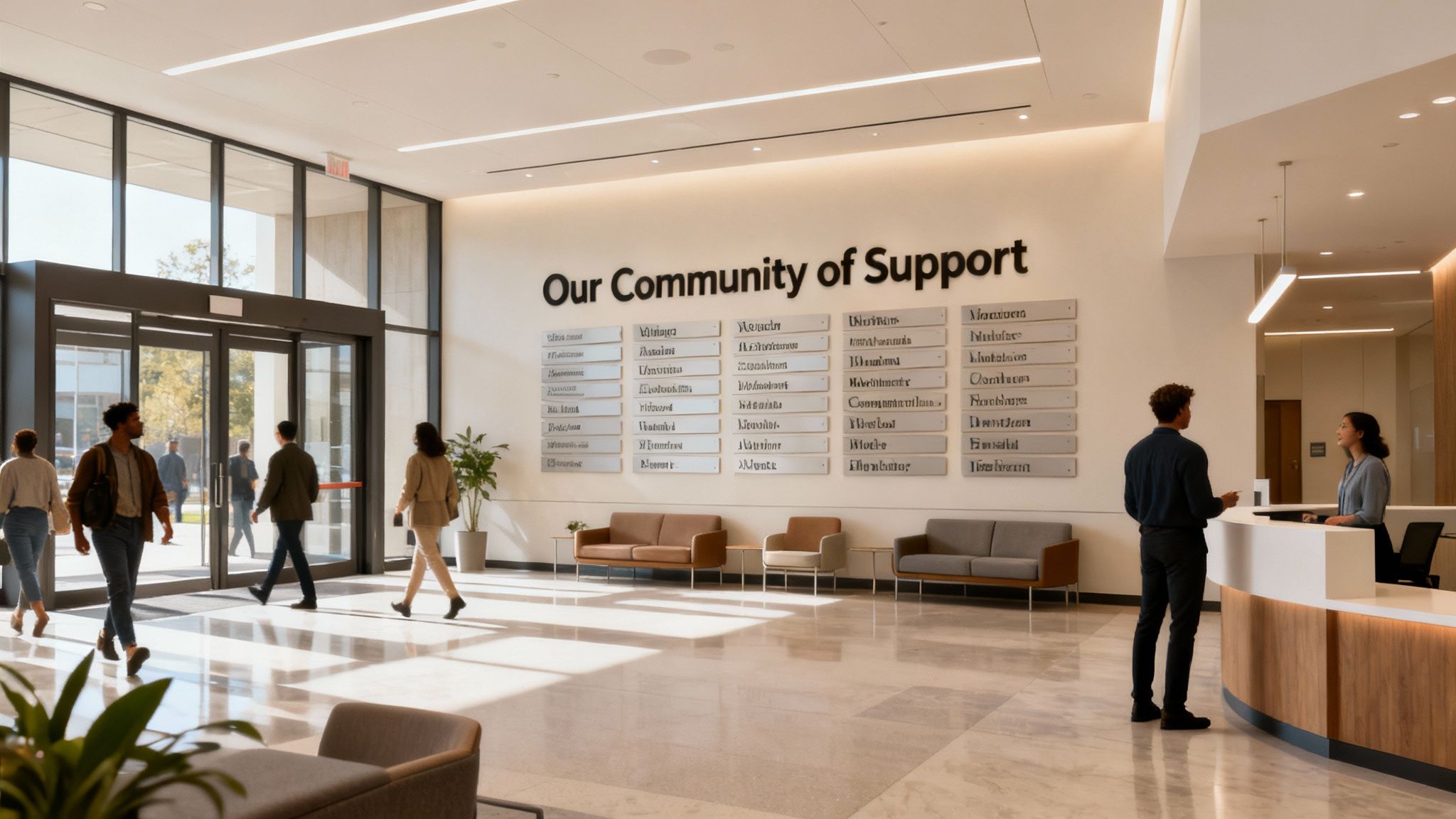
This kind of visual storytelling is absolutely essential when using donor walls to inspire prospective donors and visitors, because it shows them exactly what their support could help build. A great narrative makes philanthropy feel not just generous, but necessary.
Selecting Materials That Echo Your Mission
The materials you choose are the foundational vocabulary of your wall's story. They set the tone instantly and have to align perfectly with your organization's identity. Generic materials send a generic message; thoughtful ones communicate purpose.
Think about the story you want to tell. An environmental nonprofit might lean into reclaimed wood or sustainable bamboo to reflect its commitment to conservation. A high-tech medical research center, on the other hand, could go for sleek, polished metal and illuminated glass to convey precision and innovation.
Here are a few ideas to get you started:
For a historical society or library: Polished brass, dark cherry wood, and classic serif fonts can evoke a sense of tradition, legacy, and enduring knowledge.
For a children's hospital or youth center: Bright acrylics, playful shapes, and vibrant colors create a feeling of hope, energy, and optimism.
For a university's science building: Etched glass, brushed aluminum, and clean, geometric lines can mirror themes of discovery, technology, and academic rigor.
The texture, color, and finish of your materials all contribute to the emotional weight of the display.
Weaving Storytelling Elements into the Design
A list of names is just data. It’s the context that turns that data into a story. To truly inspire, you have to connect a donor's name to a real-world outcome. This means weaving impact statements, powerful quotes, and compelling images directly into the design.
Instead of just a name, try including a short phrase like, "Whose generosity built the labs where new discoveries are made." This simple addition reframes the donor from a name on a list to a true partner in your progress.
The most effective donor walls answer an unspoken question every visitor has: "What was accomplished because of these people?" By showing the 'why' behind the gift, you inspire others to imagine their own impact.
A powerful technique is to connect the wall's design to the very project it funded. For instance, a university's wall for a new performing arts center could incorporate subtle curves that mimic the building's architecture. This creates an immediate, intuitive link between the act of giving and the beautiful result. For a deeper dive, explore our guide on how to build a donor wall that tells a story.
The Strategic Role of Lighting
Lighting isn't just for visibility; it's a tool for creating focus, mood, and even a little drama. Strategic lighting can transform a simple display into a captivating focal point, guiding the visitor's eye and highlighting the most important elements.
Consider these lighting techniques:
Backlighting: Placing lights behind translucent materials like acrylic or frosted glass creates a soft, elegant glow that makes names appear to float.
Spotlighting: Using focused beams of light can draw attention to the names of key contributors or to a central mission statement.
Integrated Lighting: Embedding LED strips directly into the wall's structure can create dynamic lines and shapes that add a modern, sophisticated feel.
The right lighting ensures your wall is not just seen, but experienced. It adds depth, creates ambiance, and reinforces the importance of the people being honored. This attention to detail shows a high level of gratitude, which is critical for donor retention. In fact, research shows that 68% of U.S. adults are more likely to donate again if they receive prompt and visible acknowledgment.
Choosing the Right Location for Maximum Impact
You could have the most stunning, brilliantly designed donor wall in the world, but if no one sees it, it’s not doing its job. Where you place your recognition display is every bit as important as what it looks like and what it says. This isn't just about finding a blank wall; it's a strategic decision that directly impacts its power to inspire.
Think about it. A wall tucked away in a quiet, low-traffic corridor is a huge missed opportunity. To get the most out of your investment, you need to put your story right where your audience will bump into it naturally. That means taking a good, hard look at your facility's layout and understanding how people actually move through the space.
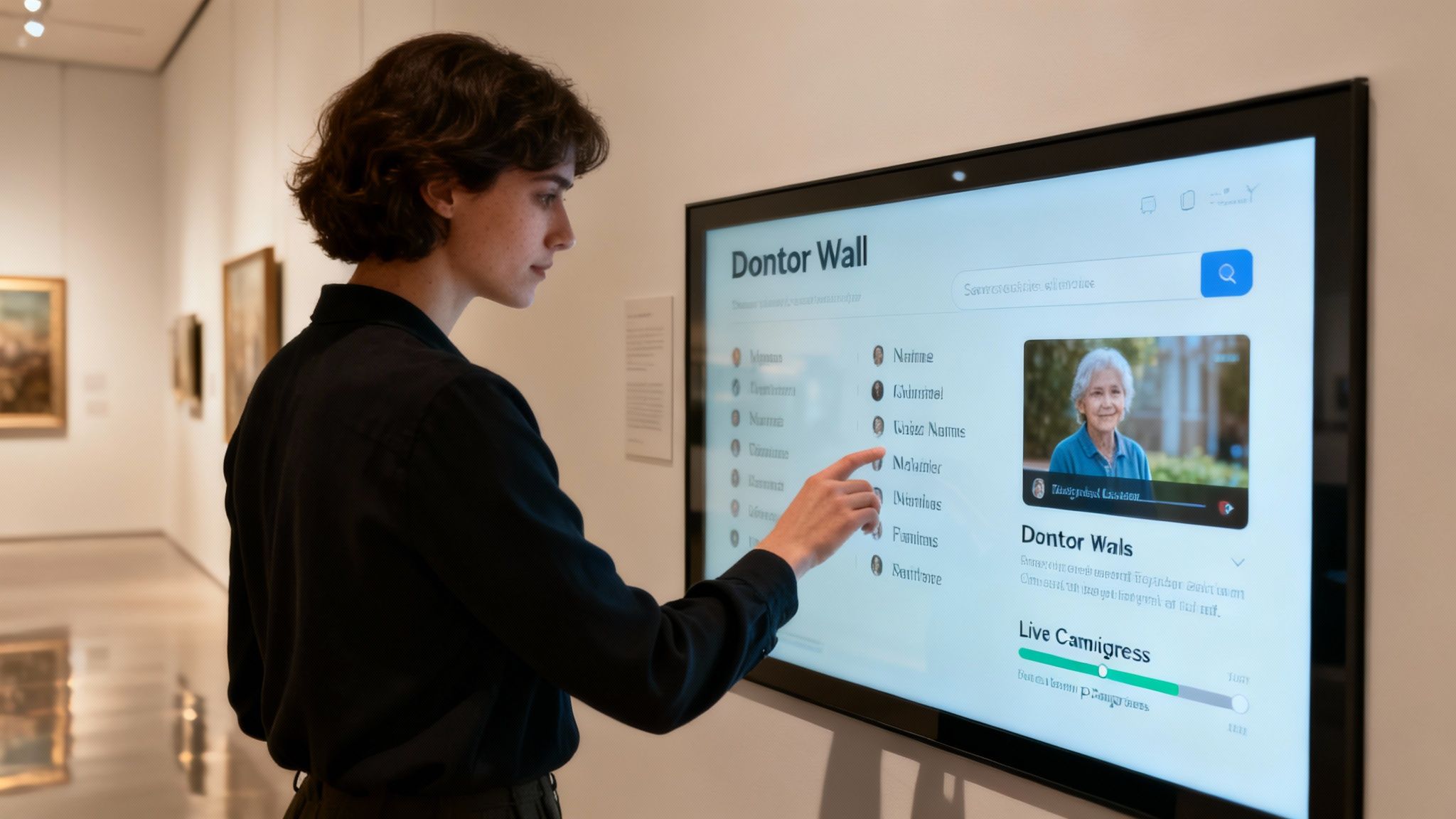
Put yourself in the shoes of a first-time visitor, a longtime supporter, or even a potential major donor. Where do they walk in? Where do they hang out? Where do they stop for a moment? The answers will point you straight to the prime real estate for your donor wall.
Analyzing Foot Traffic and Visitor Mindset
First things first, you need to map out the high-traffic zones in your building. Lobbies, main hallways, and entrances to key spots like auditoriums or event spaces are the usual suspects. But don't stop at just counting footsteps.
You also have to think about the visitor's mindset and how long they're likely to stick around in any given spot. We call this linger time. How people feel and how long they stay in a space really dictates the kind of story you can tell.
High-Traffic, Low-Linger Areas: In a busy main entrance, you’ve got just a few seconds to grab someone's attention. The wall here needs a bold, visually striking design with a message that hits home instantly. Go for big, impactful graphics and a clear, concise mission statement.
Low-Traffic, High-Linger Areas: On the other hand, a quiet lounge or a waiting area outside a dean's office is a totally different ballgame. Here, visitors have the time and headspace to engage with a more detailed story, read individual profiles, or play around with an interactive digital display.
Imagine a hospital. A donor wall in the emergency room waiting area—a place of high stress and anxiety—would need a very different tone than one in a peaceful chapel or a joyful maternity wing. Context is everything.
Matching the Location to the Message
The best placements are those that physically connect the donor wall to its message. When you put a display that recognizes donors to a new science building right outside the state-of-the-art lab they funded, you create a powerful, undeniable link between generosity and results.
This simple act transforms the wall from a list of names into living proof of impact. It gives your tour guides and development officers a perfect opening to say, "Look at what their support built." It makes the impact real, tangible, and deeply inspiring.
The most powerful placements create a seamless narrative, connecting the donor, the gift, and the result in a single, compelling view. This spatial storytelling is essential when using donor walls to inspire prospective donors and visitors.
For a deeper dive into placement strategies, you can explore some of the best locations for donor walls and how placement affects visibility in our detailed guide.
Creating Recognition Touchpoints
Don't feel like you have to put all your eggs in one basket with a single, massive wall. A really effective strategy often involves creating a network of smaller recognition touchpoints sprinkled throughout your facility. This approach weaves the story of philanthropy into the very fabric of your building and reinforces a culture of gratitude around every corner.
These smaller, complementary displays can be anything you can dream up:
Individual plaques on funded rooms or pieces of equipment.
Small digital screens in elevators that cycle through donor stories.
Engraved bricks on a patio or walkway.
A "donor of the month" feature in a busy café.
By spreading out the recognition, you ensure the message of donor impact is seen again and again by everyone who walks through your doors. This network of touchpoints works together to create an environment where giving is visibly celebrated and deeply valued, subtly inviting every visitor to imagine their own place in that story.
Integrating Digital Donor Walls for a Modern Audience
Let's be honest, the days of static, engraved plaques are numbered. Making the leap to a digital donor wall isn't just a modern facelift—it's a fundamentally different way to engage with your community. It offers a kind of flexibility and storytelling power that traditional walls simply can't touch.
Think about it. A beautiful, static display is meaningful, but it’s also finite. Over time, it can fade into the background, becoming just another part of the building's scenery. A digital wall, on the other hand, is alive. It’s a dynamic canvas that can change, update, and react, ensuring the story of your supporters stays fresh and compelling.
This energy is exactly what you need to capture the attention of an audience that's used to interactive, visually rich media. The ability to push real-time updates during a campaign or feature a limitless roster of supporters means your display will never feel dated.
Telling Richer, More Engaging Stories
This is where digital really shines: its capacity for deep, moving stories. A static wall lists a name. A digital wall can bring that name to life, forging a powerful emotional connection that’s essential for using donor walls to inspire prospective donors and visitors.
Just imagine what you could feature:
Beneficiary Videos: Short, powerful video testimonials from students, patients, or community members who’ve been directly impacted. When a prospective donor sees the faces and hears the voices of those they can help, their potential contribution suddenly feels incredibly real.
Event Photo Galleries: Capture the spirit of your latest gala or volunteer day with a rotating gallery of high-quality photos. It’s a great way to celebrate attendees and show prospects the vibrant community they could be a part of.
Live Progress Bars: Nothing creates urgency and a sense of shared purpose like a live fundraising thermometer during a campaign. Visitors can literally see the needle move as donations come in, which is a huge motivator.
This kind of multimedia approach turns a passive glance into an active experience. It instantly answers the question on every visitor's mind: "What does my support actually accomplish here?" For a deeper dive, our guide on how digital donor walls boost fundraising engagement has even more ideas.
Boosting Engagement with Interactive Features
One of the biggest hurdles with any traditional display is "display blindness"—people walk right past without ever truly seeing the names. Interactive touchscreens completely sidestep this problem by inviting people to participate.
Instead of just scanning a list, a potential donor can now explore on their own terms. They can touch the screen to find a specific name, learn more about a campaign, or watch a video about a building project's history. This simple act of interaction makes the experience far more personal and memorable.
By allowing visitors to guide their own discovery process, you empower them to find the stories that resonate most deeply with them personally. This creates a far more memorable and impactful experience than a static list of names ever could.
This interactivity is a game-changer, especially with younger audiences. In fact, some studies show a remarkable 23% increase in repeat donations when organizations use effective digital recognition. With 82% of nonprofit professionals calling technology crucial for fundraising, it's no surprise that institutions like universities and hospitals have boosted annual giving by up to 30% by adopting digital formats that appeal to multimedia-savvy donors.
When choosing between a traditional static display and a modern digital one, it helps to see the features side-by-side. Each has its strengths, and understanding them will help you decide what best fits your organization's goals, space, and audience.
Static vs Digital Donor Walls: A Feature Comparison
Feature | Static Donor Wall | Digital Donor Wall |
|---|---|---|
Content Updates | Difficult and costly; requires new fabrication. | Instant and easy; can be done remotely. |
Storytelling | Limited to names and giving levels. | Unlimited; supports video, photos, and text. |
Interactivity | None; passive viewing only. | High; touchscreens allow user-led exploration. |
Scalability | Finite space; becomes full over time. | Virtually limitless; can display thousands of names. |
Upfront Cost | Generally lower, depending on materials. | Higher initial investment for hardware/software. |
Long-Term Cost | High cost for each addition or update. | Low; minimal cost for content updates. |
Visual Appeal | Timeless elegance, architectural feel. | Modern, dynamic, and eye-catching. |
Ultimately, the choice depends on your narrative. If you seek timeless permanence, a static wall is a classic. But if you want to tell an evolving story that actively engages visitors, a digital wall is the clear winner.
Implementing Your Digital Display
Bringing a digital donor wall to life involves a few key pieces. First, the software. You'll want a content management system (CMS) that's intuitive, so your team can easily update stories, add new donors, and change layouts without needing to call an IT specialist.
On the hardware side, the screen quality is everything. You’re looking for a crisp, bright, and reliable presentation. When you're sourcing components, you might look into specialized options like indoor LED wall panels for a high-impact look. Just as important is the physical housing around the screen—it should blend seamlessly with your building’s architecture and brand.
But going digital doesn't mean you have to abandon tradition. Some of the most effective donor walls I've seen are hybrids. They combine the timeless elegance of engraved materials for top-tier donors with the dynamic storytelling of a digital screen for everyone else. This approach truly offers the best of both worlds, honoring your most significant supporters with permanence while keeping the broader story of giving fresh and engaging for every single visitor.
Activating Your Wall to Fuel New Giving
Getting your beautifully designed donor wall installed is a huge moment, but it's really the starting line, not the finish. If you want to get the most out of your investment, you have to turn that static display into an active fundraising tool. Think of the installation as flipping a switch—now it’s time to channel that energy into sparking new gifts and strengthening your community.
A wall that just sits there is a massive missed opportunity. Your display should be a living, breathing part of your organization's daily life. It’s a hub for gratitude, a backdrop for storytelling, and a natural way to start conversations about future support. By intentionally building activities around it, you make sure it stays a dynamic focal point instead of just fading into the architecture.
Launch with an Unveiling Ceremony
Kick things off with an official unveiling event. This isn't just a ribbon-cutting; it's a powerful stewardship moment that signals just how much your organization values philanthropy. Be sure to invite the donors featured on the wall, your board members, key staff, and even local media.
Make the ceremony an experience. Have your CEO or, even better, someone who has directly benefited from the donations share a heartfelt story of impact, tying their success right back to the names on the wall. This kind of public celebration creates a buzz, shows genuine gratitude, and gives you a goldmine of photos and videos you can use for months.
Make It a Centerpiece for Events
Don't let the unveiling be a one-time thing. Make a point to host other gatherings and donor appreciation events in the same space as the wall. Use it as a natural, elegant backdrop for everything from a major donor breakfast to a new member orientation.
When you bring people together in front of this powerful symbol of community support, the message is clear and constant. The wall becomes a silent partner in your conversations, reinforcing the culture of generosity you're trying to build. This isn't just a nice idea; it works. An analysis by NonProfit Times confirms that 43% of nonprofits see their walls as core to their fundraising success, and we know that gratitude strategies can yield 50% higher contributions. You can find more great insights on building a culture of generosity on PDG Design's blog.
Empower Your Team to Be Storytellers
Your staff, volunteers, and tour guides are your best ambassadors. They're on the front lines, talking with visitors every single day. You need to arm them with the stories behind the names on the wall so they can use it as a natural conversation starter.
Train your team to weave these stories into their regular interactions. A simple, personal touch can make all the difference.
For a Tour Guide: "As we pass our donor wall, I want to point out the Miller family. Their gift funded the scholarship program that now supports a third of our students."
For a Development Officer: "It’s so great to see you, Jane. I was just sharing the story of John Smith, whose name is right here. His legacy gift built this entire lab, and we have a similar opportunity to name our new arts wing."
This approach turns the wall from a passive list of names into an active tool for engagement, seamlessly connecting past generosity with future opportunities.
The most powerful fundraising conversations aren't pitches; they're stories. Train your staff to see the donor wall not as a monument, but as a library of stories they can share to inspire the next chapter of giving.
By actively folding your wall into your organization’s events, communications, and daily conversations, you ensure it's always working for you. It becomes more than just a thank you—it's a catalyst, constantly using donor walls to inspire prospective donors and visitors by showing them a clear and compelling path to making their own impact.
Even after you’ve nailed down a vision, a host of practical questions always pop up when planning a donor wall. Getting clear, straightforward answers is the key to moving forward with confidence.
Let's tackle some of the most common queries we hear from organizations. Think of this as a quick-start guide to help you navigate the nitty-gritty of budgeting, etiquette, and long-term strategy, ensuring your final display is beautiful, sustainable, and effective.
Common Questions About Donor Walls
How Do We Decide Who Gets Recognized?
The absolute bedrock of any fair recognition program is a clear, consistent gift acceptance policy. This is a non-negotiable. Your policy needs to spell out the exact contribution levels for inclusion on the wall, leaving zero room for guesswork or ambiguity.
These giving tiers should be tied directly to your fundraising goals. For example, you might create different plaque sizes or more prominent placement for gifts of $5,000, $25,000, and $100,000+. It’s also critical to decide upfront if you're recognizing cumulative giving over time, one-time gifts, or maybe a combination of both.
Make sure your policy explicitly defines:
Specific Tiers: The exact dollar amount for each recognition level.
Gift Type: Does this apply to cash gifts, pledges, in-kind donations, or planned gifts? Be specific.
Timeframe: What's the window for cumulative giving? Is it "lifetime giving" or contributions made "within a 5-year campaign"?
Transparency is everything when it comes to donor trust. A consistent policy that’s applied fairly to everyone prevents any hint of favoritism and shows your organization operates with integrity. That’s how you build strong, lasting relationships.
And a pro tip: consider creating a special, dedicated space to honor your legacy or planned gift donors. These folks have made an incredible commitment to your future, and acknowledging them separately is a beautiful way to celebrate their unique, forward-thinking generosity.
What Is the Best Way to Future-Proof Our Donor Wall?
Future-proofing isn't something you tack on at the end—it has to be baked into the initial design. The last thing anyone wants is a beautiful wall that’s impossible or wildly expensive to update in just a couple of years. The whole point is to choose a system designed for growth.
Go for a modular or expandable design that makes additions easy. We’ve had great success with systems that use individual magnetic plaques, engraved glass panels that can be swapped out, or interchangeable metallic plates. They let you add new names without having to tear everything down and start over.
Of course, digital donor walls are inherently future-proof. Adding, removing, or re-shuffling names is just a simple software update. This makes them a fantastic solution for organizations that anticipate steady growth or run frequent campaigns.
Even with a static wall, work with your designer to plan for expansion from day one. This might mean intentionally leaving some blank space in the initial layout or choosing a design where new panels can be seamlessly added later on. A little foresight here saves a ton of time and money down the road.
How Much Should We Budget for a Donor Wall?
Budgeting for a donor wall goes way beyond the initial price tag. Costs can swing wildly depending on the size, materials, complexity, and whether you’re going static or digital. You have to look at the whole picture.
Your budget should always account for a few key components:
Design Fees: The creative and strategic work from a professional design firm.
Materials & Fabrication: The actual cost of the physical parts, from wood and metal to touchscreens and mounts.
Installation: The professional labor needed to get the display installed safely and perfectly.
Ongoing Maintenance: This is the one people forget! It includes cleaning, potential repairs, and for digital walls, software subscription fees.
A small, simple plaque-based wall might run a few thousand dollars, while a large-scale, interactive digital installation can easily climb into the tens of thousands or more. Always get detailed quotes that break everything down. Remember, this is a long-term investment in donor stewardship and a powerful tool for using donor walls to inspire prospective donors and visitors, so setting aside a realistic budget is vital.
How Can We Measure the ROI of a New Donor Wall?
Measuring the return on a donor wall is a blend of hard data and human feedback. On the quantitative side, you can track any noticeable uptick in unsolicited donations or inquiries that come in right after the wall is unveiled.
One of the most effective tactics we've seen is placing a QR code on or near the wall that links to a dedicated online donation page. This creates a direct, trackable line from the wall's influence to a gift. For digital walls, the built-in analytics are a goldmine, showing you interaction rates and revealing which donor stories or campaign pages get the most views.
On the qualitative side, start gathering stories from your team. Ask your development officers, staff, and tour guides about the conversations the wall is sparking. Are prospective donors asking about it? Are current supporters proudly bringing their families to see their name? This anecdotal evidence is a powerful indicator of how the wall is shaping your organization's culture of philanthropy. Over time, you should be able to draw a clear line between the wall’s presence and better donor retention and acquisition.
At Stobbe Design, we specialize in creating custom donor walls that do more than just list names—they tell your story and inspire future giving. From initial concept to flawless installation, we build recognition displays that honor your supporters and reflect your unique mission. Learn more about our collaborative design process and see how we can help you create a lasting legacy.

Comments