
Designing a Donor Wall Tree That Inspires Giving
More than just a list of names on a wall, a donor wall tree is a work of art designed to publicly honor your supporters. It’s a sculptural installation that transforms a simple list of contributors into something deeply symbolic and beautiful, with each leaf on its branches engraved with a donor's name.
The Power of a Donor Wall Tree
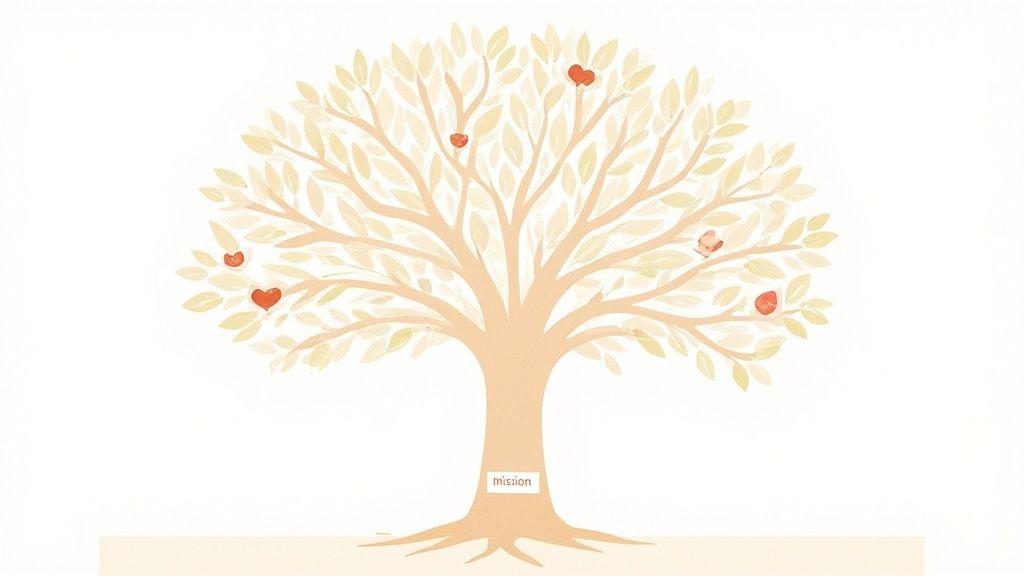
Think of your organization as a living, growing tree. Its roots are your core mission, running deep and strong. The trunk represents the stability you and your team provide day in and day out. The branches are your outreach, extending into the community you serve.
And the leaves? Each leaf is a donor whose contribution nourishes the tree, allowing it to grow, flourish, and provide for others. This is the powerful analogy at the heart of a donor wall tree.
It’s so much more than names etched on a plaque. It’s a living testament to what a community can achieve when they believe in a shared cause. This kind of installation becomes a permanent, public thank you, turning gratitude from an idea into a tangible, visually stunning experience. A thoughtfully designed donor tree often becomes a centerpiece in a facility, telling a story of community and impact at a single glance.
Building a Culture of Philanthropy
A donor wall tree doesn't just look back at past contributions; it actively helps build a culture of giving for the future. When visitors, staff, and potential supporters see the names celebrated on the wall, it sends an unmistakable message: this organization values its community, and every contribution, big or small, truly matters.
This very public display of appreciation strengthens the bond you have with existing donors, reinforcing their decision to give and encouraging them to stick with you for the long haul.
It also acts as a quiet, powerful motivator for new donors. When people see the names of their peers, local leaders, or respected businesses on the tree, it offers powerful social proof. It inspires them to add their own "leaf" to a branch, creating a cycle of generosity that can become a cornerstone of your entire fundraising strategy.
A donor wall tree isn't just a record of past donations; it's an investment in future giving. It visually communicates the strength of your community and invites others to become part of the story.
More Than Recognition, An Artistic Statement
Ultimately, a donor wall tree is much more than a recognition tool. It becomes a piece of your organization's identity and environment. The materials you choose—from the warm, traditional feel of wood to the sleek, modern elegance of metal and acrylic—say something about your brand's personality.
Here’s what a donor tree really accomplishes:
It tells a visual story, beautifully illustrating the growth and support your organization has earned over time.
It creates a lasting legacy, giving donors a permanent, tangible link to the cause they care so deeply about.
It inspires future support, serving as a constant and beautiful reminder of what’s possible through collective giving.
By turning a simple list into an engaging work of art, a donor wall tree forges an emotional connection that a static plaque often can't. That’s what makes it such an effective and meaningful way to show your gratitude.
Bringing Your Donor Recognition Tree to Life
This is where the magic happens. The design phase is where we take the powerful idea of your donor recognition tree and start to give it a physical form. It's a creative journey, one that’s about translating your mission, gratitude, and unique brand identity into a piece of art that truly connects with everyone who sees it. The process starts long before we even think about materials; it begins with your vision.
Every choice matters, from where the tree will live to its overall size. Will it be a showstopper, a grand feature in your main lobby? Or maybe a more intimate installation tucked into a quiet corridor? Getting the location right is key. You want your donor tree to feel like a natural, celebrated part of your building—not just an afterthought.
Defining Your Artistic Style
The artistic style of your donor tree says so much about your organization. There's no one-size-fits-all answer here; the best designs are an honest reflection of who you are. A modern, abstract tree with sleek lines and metallic finishes can signal innovation and a forward-thinking mission, making it a great fit for a tech incubator or a cutting-edge research facility.
On the other hand, a classic, more literal tree crafted from warm wood can create a sense of tradition, stability, and natural growth. This approach is often a favorite for universities, community foundations, and hospitals that want to project a feeling of deep-rooted trust and care. You can find more inspiration by exploring different creative donor wall ideas and seeing how various styles come alive in unique spaces.
Planning for Growth and Longevity
This might be the most important part of designing a donor wall tree: planning for the future. Your organization is going to keep growing, and your tree needs to be ready to welcome new supporters without looking crowded or "full." A smart design anticipates this growth from day one, leaving room for more leaves, new branches, or even entire sections down the road.
A well-designed donor tree is a living document. It should be built not just to honor today's supporters, but with the flexibility to celebrate the community that will sustain your mission for years to come.
This kind of foresight is what separates a good design from a great one. It prevents the display from looking cluttered or feeling "finished" too soon. Modular designs, where you can seamlessly add new pieces over time, are a popular and incredibly practical way to handle this. This scalability ensures your installation remains a beautiful, cohesive tribute to your expanding community of supporters.
Making Recognition Meaningful
At the end of the day, the goal is to create something that builds a genuine connection and inspires people to keep giving. Meaningful recognition is the bedrock of donor retention. In fact, studies show that 75% of donors are more likely to give again if they feel their contributions are truly seen and valued.
A donor wall tree is a powerful, permanent way to express that gratitude. Every single leaf becomes a testament to your community's collective impact. The design you create is more than just a beautiful installation; it's a strategic tool for building a lasting culture of philanthropy.
Choosing Materials That Tell Your Story
Think of the materials you choose for your donor wall tree like the words you use to tell a story. They set the tone, stir up emotion, and ultimately define the entire experience. This is where your artistic vision bumps up against practical reality, where you have to find that sweet spot between aesthetics and longevity. The right material doesn't just look good; it communicates who you are.
For instance, metals can tell very different stories. A sleek, brushed aluminum trunk and leaves might convey a modern, forward-thinking spirit—perfect for a technology center or an innovative research hospital. Its clean lines and cool tones just feel like efficiency and progress.
On the other hand, bronze brings a real sense of permanence and prestige. Its warm, rich patina speaks to tradition, legacy, and the enduring impact of philanthropy. It’s a classic choice for universities and historic institutions for a reason. To get a better feel for its timeless appeal, you can learn more about how to use cast bronze plaques in recognition projects.
Natural and Modern Alternatives
Of course, metals aren't your only option. Other materials can tell equally compelling stories. The natural warmth of wood, with its unique grain and texture, can create a feeling of groundedness, growth, and community. A donor tree crafted from oak or maple feels approachable and organic, making it ideal for a community center, a library, or an environmental organization.
If you're aiming for a more artistic or contemporary feel, materials like acrylic and glass offer incredible versatility. They can be frosted for a soft, ethereal look or polished to be crystal-clear. These materials are fantastic at catching and reflecting light, adding a dynamic, vibrant quality to your space. An acrylic donor wall tree can feel light and airy, a great fit for organizations that want to project creativity and transparency, like art museums or children’s hospitals.
Your material choice is a non-verbal cue that communicates your organization's identity. It should feel like a natural extension of your brand and the physical space it occupies, reinforcing the story you want to tell your community.
Comparing Common Donor Wall Tree Materials
To help you decide, let's break down some of the most popular materials. Each one offers a different blend of look, feel, and function, so the "right" choice really depends on what you're trying to achieve.
Material | Typical Aesthetic | Relative Cost | Durability & Maintenance |
|---|---|---|---|
Bronze | Traditional, Prestigious, Classic | High | Extremely durable; requires occasional polishing to maintain shine. |
Aluminum | Modern, Sleek, Professional | Moderate | Very durable and low-maintenance; resistant to corrosion. |
Wood | Warm, Natural, Grounded | Moderate to High | Good durability indoors; requires sealing and periodic care. |
Acrylic | Contemporary, Light, Versatile | Low to Moderate | Susceptible to scratching; requires careful cleaning with soft cloths. |
Glass | Elegant, Transparent, Artistic | Moderate to High | Can be fragile if not properly tempered or protected; easy to clean. |
This table is just a starting point, but it highlights the trade-offs you'll need to consider. Think about not just the upfront cost, but also the long-term upkeep and how well the material aligns with your brand.
Balancing Form with Function
Ultimately, picking the right material is a balancing act. Your decision should be guided by a few key questions:
Aesthetic Alignment: Does the material’s look and feel actually match your organization’s brand and the architecture of the space?
Durability and Maintenance: How will this material hold up over time? Think about things like sunlight exposure, humidity, and foot traffic.
Budgetary Realities: Premium materials like cast bronze have a higher initial cost. Options like acrylic or aluminum can be more budget-friendly.
By weighing these factors carefully, you can choose materials that not only create a stunning donor wall tree but also tell a cohesive and powerful story of gratitude that will resonate for years to come.
Planning Your Donor Wall Tree Budget
Let's talk about the money side of things. Creating a beautiful donor wall tree is a meaningful investment in your mission, and getting a handle on the budget from day one is key. Think of it less as a cost and more as a financial roadmap that ensures your vision aligns perfectly with your resources.
Just like building a house, the final price tag is a blend of several factors. The most obvious one? Size. A massive, sprawling tree that commands an entire wall will naturally have a different budget than a smaller, more intimate design for a quiet corner. The scale of the installation and the sheer number of donor leaves you need are the starting point for figuring out your costs.
Key Factors Influencing Cost
Beyond just the size, a few other big-ticket items will shape your final budget. Thinking through these early on will save you from surprise expenses down the road and help you strike the right balance between impact and affordability.
Material Selection: As we've touched on, your choice of materials plays a huge role. Solid cast bronze, for example, has that premium, legacy feel—and a price tag to match. On the other hand, sleek materials like aluminum and acrylic can deliver a stunning, modern look without stretching the budget quite as far.
Design Complexity: There's a big difference between a classic, elegant tree and a one-of-a-kind sculptural piece with intricate, branching details. A simpler, more standard layout will always be more cost-effective than a highly customized design.
Installation and Site Prep: The tree itself is just one part of the equation. You'll need to budget for professional installation, and that cost can shift depending on what kind of wall you have and how easy it is to access. Sometimes, the wall itself needs a little TLC first—like reinforcement or a fresh coat of paint—before the tree can even go up.
Uncovering Potential Hidden Costs
A smart budget is one that anticipates everything, not just the obvious stuff. To keep your project running smoothly from concept to unveiling, it's wise to plan for the costs that might be hiding in plain sight.
A transparent budget is the bedrock of a successful donor recognition project. Planning for both the visible and hidden costs ensures your investment honors your donors beautifully without straining your organization's resources.
Keep an eye out for these common "extra" expenses:
Design and Consultation Fees: Most projects kick off with creative work. Be sure to account for any fees associated with initial concepts, design mockups, and the time you'll spend planning with your design team.
Future Additions: Your community of supporters is going to grow, right? A hallmark of smart planning is figuring out the cost of adding new leaves or plaques down the line. You want your tree to grow with you.
Lighting and Electrical Work: If you're dreaming of a donor wall tree with integrated lighting that truly makes it a showpiece, don't forget to budget for the fixtures and the cost of hiring an electrician to wire it all up.
By thinking through all these pieces from the start, you're not just creating a budget—you're creating a realistic financial plan that honors both your donors and your bottom line.
Integrating Digital Elements with Your Donor Wall
What happens when a timeless symbol of gratitude meets modern technology? You get a powerful hybrid approach that offers the best of both worlds—the permanent, artful presence of a donor wall tree and the dynamic storytelling of a digital display. This combination creates a much richer, more engaging experience for everyone who walks through your doors.
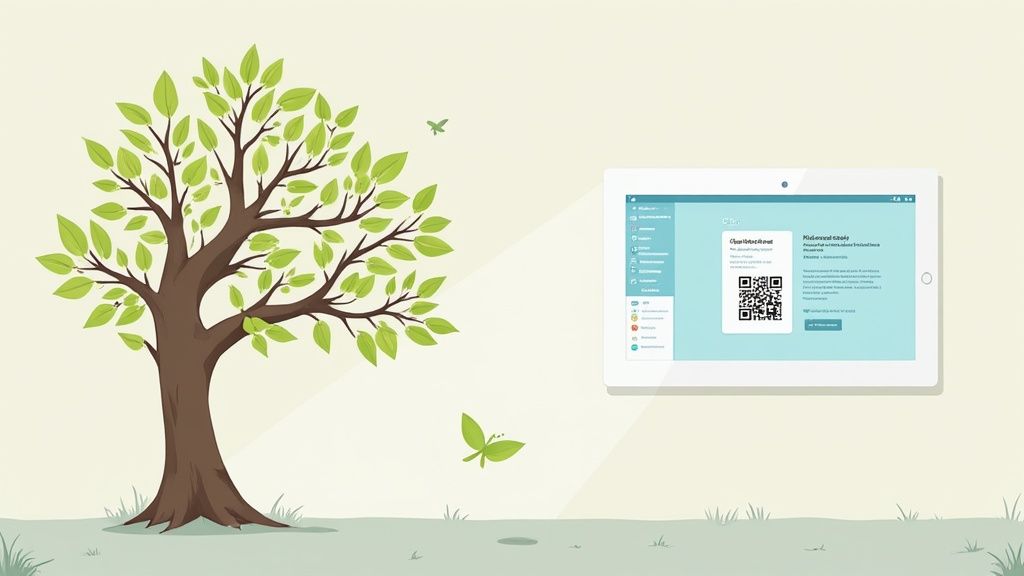
Picture a beautifully sculpted tree on your wall, with an interactive touchscreen elegantly mounted beside it. A visitor can admire the physical leaves honoring your supporters, then turn to the screen to dive deeper. Here, they can explore donor stories, watch videos about the impact of their contributions, or see photos from your latest fundraising gala.
This hybrid model transforms a static display into a living, breathing installation that keeps your recognition fresh and relevant. The physical tree provides the artistic anchor, while the digital screen offers endless flexibility.
The Power of Interactive Storytelling
A digital component lets you move beyond simply listing names. It empowers you to share the why behind each gift, forging a much deeper emotional connection with your community.
You can use the digital screen to:
Share In-Depth Profiles: Feature interviews with key donors, allowing them to explain in their own words what your mission means to them.
Showcase Campaign Progress: Display real-time fundraising thermometers, countdowns to event dates, or updates on capital campaigns.
Demonstrate Tangible Impact: Use videos and photo galleries to show exactly how donations are being put to work.
The rise of digital recognition is reshaping how organizations engage supporters, particularly in healthcare philanthropy. Hospitals investing in these tools have seen up to a 35% increase in donor engagement after installation, as the technology allows for instant updates and compelling storytelling.
Balancing the Best of Both Worlds
A hybrid approach neatly solves the common debate between traditional and digital displays. You get the classic, tangible appeal of a physical installation alongside the versatility and modern flair of a screen. For a detailed comparison, explore our guide on the pros and cons of digital vs. traditional donor walls.
Integrating digital elements isn't about replacing your donor wall tree; it's about amplifying its message. It allows you to honor your supporters with a timeless piece of art while captivating your audience with dynamic, up-to-the-minute stories.
This strategic blend ensures your recognition efforts are not only beautiful but also highly effective, keeping your community connected and inspired. It’s a smart way to honor the past while building a bridge to the future of philanthropy.
How Donor Trees Fuel Your Fundraising Strategy
A donor wall tree is so much more than a beautiful piece of art; it's a strategic asset that works around the clock to strengthen your fundraising. In a world where every dollar counts, this kind of recognition goes way beyond a simple "thank you." It becomes an active tool for building a lasting culture of philanthropy—a powerful, visual anchor for your entire mission.
When your current supporters see their names permanently celebrated, it validates their decision to give and deepens their commitment. This public display of gratitude creates a powerful feedback loop, encouraging them to stick with you. At the same time, it acts as a compelling invitation to new donors, showing them a community they’ll want to join.
Turning Recognition Into Retention
In today’s fundraising climate, keeping the donors you have is more critical than ever. Recent data shows a tough trend: even though total dollars raised are up, the number of individual donors has actually declined. For example, in Q1 2025, donor retention rates hovered around 18.1%, a small but meaningful dip from 18.3% the year before. This highlights just how important effective engagement strategies are. You can dig into these trends in the latest Fundraising Effectiveness Project report.
A donor wall tree tackles this problem head-on by making appreciation a visible, lasting part of your space.
By transforming gratitude from a fleeting moment into an enduring installation, a donor wall tree becomes a cornerstone of your retention strategy, constantly reminding supporters of their value and inspiring continued loyalty.
This physical representation of community support forges stronger bonds and gives everyone a sense of collective ownership over your mission’s success.
Inspiring the Next Wave of Givers
A well-placed donor tree also serves as a powerful form of social proof. When potential contributors see the names of respected community members, their peers, and local businesses on the leaves, it builds immediate trust and credibility. It sends a clear message: this is a cause worth supporting.
This visual endorsement is often more persuasive than a direct appeal ever could be. It encourages onlookers to imagine their own name on a leaf, motivating them to become part of the story. In this way, the donor wall tree doesn’t just honor past generosity—it actively cultivates future giving, fueling your organization’s long-term financial health.
Of course. Here is the rewritten section, crafted to match the human, expert tone of your examples.
Common Questions About Donor Trees
When you're thinking about creating a donor tree, a few key questions always come up. Here are the answers we share with organizations to help them get started on the right foot.
How Do We Add New Donors in the Future?
A great donor tree is a living thing, designed to grow with your community. We always plan for the future by building in more branches or open space than you need right now.
Many designs use modular leaves or plaques that can be ordered and added seamlessly as new gifts come in. This keeps the display looking intentional and beautiful for years, never cluttered or tacked-on.
Planning for future growth isn't just practical; it's a statement of confidence in your organization's mission and the enduring generosity of your supporters.
What Is the Timeline for Creating a Donor Tree?
From the first design sketch to the final installation, you can generally expect the process to take 8 to 16 weeks. The final timeline really depends on the complexity of the design, the availability of your chosen materials, and how many rounds of revisions we need to get it just right.
A clear, collaborative process with defined milestones is the key to keeping everything on track.
Can a Donor Tree Be Installed on Any Wall?
Pretty much! Most donor trees can be securely installed on all sorts of surfaces, from standard drywall to brick and concrete. The most important thing we have to consider is the weight of the materials.
Your designer and installer will take a close look at the wall's structure to make sure it can handle the load. From there, they’ll choose the right mounting hardware to ensure your installation is safe and permanent.
At Stobbe Design, we specialize in creating custom donor recognition walls that do more than list names—they tell your unique story. We guide you through the entire process, from concept to installation, for a seamless and collaborative experience. Learn how we can bring your vision to life.

Comments