
Donor recognition naming opportunities: Guide to effective programs
Naming opportunities are more than just a fundraising tactic—they're a way to turn a generous gift into a permanent legacy. When a donor puts their name on a physical space, a program, or an endowment, you're not just getting a check; you're gaining a partner whose story becomes woven into the fabric of your organization. It transforms a simple "thank you" into a visible, lasting testament to their belief in your mission.
Why Naming Opportunities Drive Lasting Donor Impact
Moving beyond a standard thank-you note is what separates good fundraising from great fundraising. Donor recognition naming opportunities are a cornerstone of a truly sophisticated strategy because they tap into a fundamental human desire: the need to leave a mark.
When a donor’s name is attached to a new library wing, a scholarship fund, or a research program, their gift takes on a life of its own. It’s no longer just a transaction. It’s an enduring connection that says, "I was here, and I made a difference."
This approach is so effective because it hits on key psychological drivers. Public recognition validates a donor's choice to support you and solidifies their identity as a key champion for your cause. Seeing their name—or the name of a loved one they wish to honor—as part of your institution fosters a deep, multi-generational bond that a simple acknowledgment just can't match. Weaving naming opportunities into creative charity fundraising event ideas can also inject a whole new level of excitement and amplify the impact of a major campaign.
The Financial and Relational Benefits
The impact of a well-designed naming program goes far beyond just good feelings. It’s a proven driver of both financial stability and fierce, long-term loyalty. The numbers don't lie—meaningful recognition is directly tied to increased and sustained giving.
In fact, donors who receive this level of acknowledgment, like naming rights, give 39% more over their lifetime compared to those who are minimally recognized. Even better, they tend to stick around for three times longer before lapsing, and their subsequent gifts average 25% higher. This shows a clear, measurable return on the effort you put into creating a thoughtful program.
By offering a tangible legacy, you are not just selling a plaque on a wall; you are inviting a donor to become a permanent part of your organization's history and future. This shifts the dynamic from a transaction to a true partnership.
A well-structured donor recognition program can have a direct and measurable effect on your most important fundraising metrics.
Impact of Naming Opportunities on Key Donor Metrics
Metric | Average Uplift with Naming Recognition |
|---|---|
Lifetime Donor Value | 39% Increase |
Average Gift Size (Subsequent Gifts) | 25% Increase |
Donor Retention Period | 3x Longer |
Likelihood of a Major Gift | Significant Increase |
These figures underscore just how powerful a well-executed naming rights program can be, turning one-time major donors into lifelong partners.
Fostering a Multi-Generational Connection
A truly successful program also becomes a self-perpetuating engine for philanthropy. Think about it: when children and grandchildren see a family name on a university library or a hospital wing, it reinforces the values of generosity and community support. It creates a powerful, emotional touchpoint that keeps the family connected to your cause for decades to come. This long-term view is absolutely essential for building a sustainable culture of giving.
Understanding these deeper motivations is the first step in building your own program. The goal isn't just to honor past generosity, but to actively inspire future support, strengthening every stage of the donor engagement cycle. To learn more about this, you can explore our detailed guide on how to build long-term support through meaningful relationships.
Uncovering and Valuing Your Naming Inventory
The most creative—and profitable—naming opportunities are often hiding in plain sight. Sure, you have the obvious ones like buildings, lobbies, and conference rooms. But a truly compelling program begins when you move beyond that. The first step is to take a thorough inventory, thinking like both a fundraiser and a visionary to see the potential in every corner of your organization.
Get your team together and walk through your facilities. I mean everyone—program staff, board members, key volunteers. Look at everything with fresh eyes. That overlooked courtyard? It could become the "Serenity Garden." A simple hallway connecting two labs could be reborn as the "Innovation Corridor." The goal here is to create a master list of every single asset that could possibly be named.
Expanding Your Definition of an Asset
Don't stop at physical spaces. Some of your most valuable assets are intangible, and they offer incredible ways to connect with donors who are passionate about specific parts of your mission. It’s time to think bigger.
Programmatic Opportunities: Can a donor put their name on an annual lecture series, a community outreach initiative, or a specific research project? This ties them directly to the impact of your work.
Endowed Positions: Naming an endowed chair, a directorship, or a key faculty position is a prestigious way to create a lasting legacy.
Digital Assets: In our connected world, digital real estate has real value. Think about naming opportunities for a major section of your website, a digital archive, or even a proprietary software tool your organization developed.
Outdoor and Natural Features: Look outside! Gardens, walking trails, benches with scenic views, or even significant trees on your campus are all fantastic, often overlooked, opportunities.
The journey from a donor's gift to a lasting legacy is a powerful one, built on meaningful recognition.
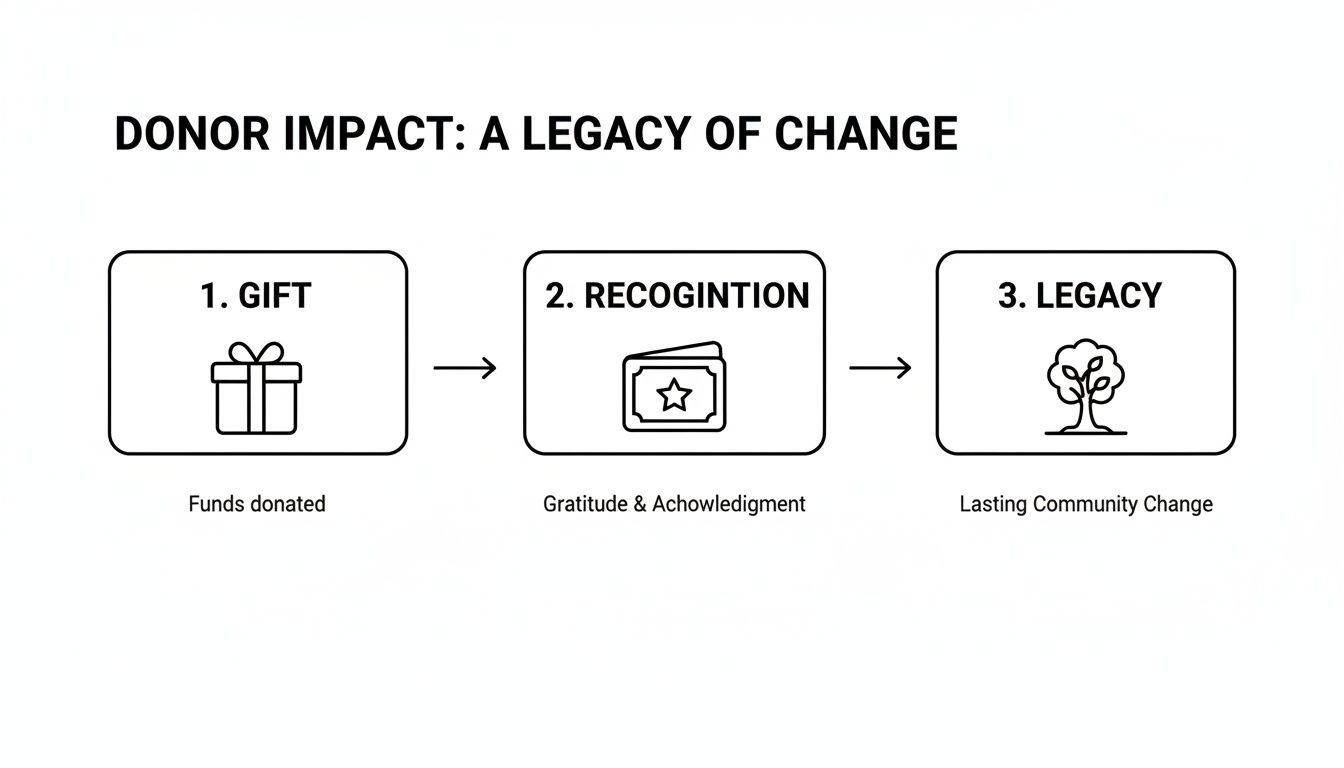
This simple process shows how a tangible gift, when properly acknowledged through a naming opportunity, transforms into an enduring legacy that inspires others to give.
The Art and Science of Valuation
Okay, so you have your full "menu" of opportunities. Now for the tricky part: assigning a price tag to each one. This isn't just guesswork. It requires a strategic approach to make sure your pricing is fair, defensible, and attractive to donors. There are really two main models that guide this process.
1. Cost-Based ValuationThis is the most straightforward method. You simply set the naming price as a percentage of the project's cost. A common rule of thumb is to price the naming of a space at 20% of its construction cost. For an entire building, that might rise to 20-40% of the total project budget. For smaller items like rooms or labs, you might even price them at 100-150% of the direct cost to help fund the broader campaign.
2. Market-Based ValuationThis approach requires you to look outward. What are similar organizations in your city or sector charging for comparable spaces? Researching the naming gift levels at peer institutions—other universities, hospitals, or museums—provides a crucial benchmark. This ensures your pricing is competitive and aligned with what donors in your community expect.
A naming opportunity’s value is ultimately determined by its visibility, prestige, and emotional appeal. A smaller, highly visible lobby may command a higher price than a larger, secluded back office. It's all about perceived impact.
Never underestimate the power of public recognition. One study found that simply mentioning donors' names would be published in a newsletter increased the donation rate by 2.7 percentage points. Even better, it boosted the chance of gifts over $100 by 1.8 percentage points. That’s proof that recognition directly motivates higher levels of giving.
Finalizing Your Inventory and Policies
With your inventory listed and valued, it’s time to get organized. Create a master list or spreadsheet that includes the item, its proposed value, its "WOW" factor (think visibility and prestige), and a brief description of its purpose. This document will become an invaluable tool for your gift officers.
Before you start presenting these opportunities, make sure your internal policies are rock-solid. You need clear guidelines on the duration of a naming right, standards for recognition design, and what happens if a named space is ever renovated or torn down. Codifying these rules in your organization's formal gift acceptance policies is a critical final step. It protects both the donor and your organization for years to come.
Crafting Your Giving Tiers and Recognition Policies
You’ve done the legwork and have a detailed inventory of potential naming opportunities. Now comes the creative part: turning that raw list into a structured, compelling program that donors can actually get excited about.
Think of it as building a "ladder of generosity." You want to create logical giving tiers that guide donors toward the perfect level of support—one that resonates with their capacity and their passion for your cause. The goal here is to design a system that feels inclusive and accessible, not just something for the ultra-wealthy.
A well-designed tier system makes philanthropy tangible. It offers meaningful options for everyone, from a few hundred dollars to name a brick in a walkway to a seven-figure gift to name an entire building. By organizing your opportunities this way, you show every donor a clear path to leaving a lasting mark.
Structuring Your Naming Opportunity Tiers
Creating these tiers is both an art and a science. It’s about grouping your inventoried assets by their valuation and prestige, but also about telling a story with your giving levels. It can be helpful to see how others create value propositions for their supporters, like the tiered approach used when building effective event sponsorship packages.
Your framework needs to be crystal clear—easy for your gift officers to explain and even easier for donors to understand. A structure that builds upon itself often works best.
Patron Level: This is your entry point. Think smaller, often collective, opportunities like names on a digital donor wall, bricks in a pathway, or leaves on a giving tree.
Leadership Level: These are mid-range gifts. They might correspond to naming individual rooms, small labs, significant pieces of equipment, or even garden benches.
Visionary Level: This is the top tier, reserved for the most significant gifts. Here, you’re offering opportunities to name entire wings, buildings, endowed chairs, or major programmatic initiative
Developing Your Formal Recognition Policy
Okay, let's get serious for a moment. Beyond just tiers and prices, you absolutely need a formal Gift Acceptance and Recognition Policy. This document is your program's constitution.
It sets clear, consistent rules that protect your organization and manage donor expectations. Trust me, it will prevent countless future misunderstandings and logistical headaches. This is a non-negotiable step for building a sustainable program that stands the test of time.
Your policy has to be comprehensive, addressing the tough questions that will inevitably come up. Think of it as the foundational rulebook for one of your most important fundraising tools. Our guide on the objectives of a sustainable donor recognition program can give you more context on building a program for the long haul.
A strong recognition policy isn’t about restricting generosity; it’s about honoring it with clarity and integrity. It ensures that every gift, and every donor, is treated with the fairness and respect they deserve.
Essential Components of Your Policy
Your formal policy should be a living document, approved by your board, that provides unambiguous guidance on several critical points. Make sure it explicitly covers these areas to avoid trouble down the road.
1. Naming DurationsFirst, decide whether naming rights are offered in perpetuity or for a limited term (say, 10, 20, or 50 years). Term-limited naming is gaining popularity because it allows you to fundraise from the same asset again once the term expires. Your policy needs to clearly define the duration for different gift levels.
2. The 'Morality Clause'This is a crucial risk-management tool. A morality clause, sometimes called a reputational clause, gives your organization the right to remove a donor's name if their future actions or public standing bring disrepute to your institution. It’s an essential safeguard for your brand’s integrity. Don’t skip this.
3. Procedures for Anonymous GiftsSome of your most generous donors may prefer to give without any public recognition. Your policy must outline exactly how to handle these requests. This might mean allowing for public acknowledgments like "From an Anonymous Friend" while ensuring your internal records are meticulously maintained for stewardship and legal purposes.
4. Renovation and DecommissioningWhat happens if a named building is renovated or torn down? It happens more than you think. Your policy must stipulate the process, whether that means moving the recognition to a new, comparable space or consulting with the original donor or their heirs. Planning for this possibility now will save you immense trouble later.
Using Design and Technology to Tell a Better Story
How you present a donor’s name is just as important as the recognition itself. A thoughtfully designed acknowledgment turns a simple thank you into a powerful, lasting story of philanthropy. It’s the difference between a name on a list and a legacy woven right into the fabric of your building.
From timeless brass plaques to dynamic digital displays, the creative execution here is your chance to make an impression that truly sticks.
Mastering Stewardship for Named Donors
Getting that major naming gift across the line feels like a victory lap. It is! But it’s also the starting pistol for the real race: stewardship. The long-term success of your naming opportunities program isn’t measured by the check cleared or the plaque installed, but by what happens in the years that follow.
This is where you turn a transaction into a true, multi-generational partnership.
Your goal is to make these key donors feel like the valued insiders they are, giving them a front-row seat to the impact they’ve made possible. This isn't just about sending a holiday card. It's a thoughtful, deliberate strategy for keeping that relationship vibrant and meaningful.
When you get this right, you’re not just stewarding a gift; you're stewarding a legacy. You're ensuring the donor and their entire family remain champions of your cause for years to come.
Creating a Bespoke Stewardship Plan
A generic thank-you letter just won't cut it for someone who has put their family’s name on your building. Every named donor deserves a personalized stewardship plan that honors the significance of their commitment. The secret is to make every single touchpoint feel special and directly tied to what they supported.
Think about it: if a family funded your new science lab, shouldn't they be the very first people you call when a groundbreaking discovery is made inside its walls?
Here are a few practical strategies to bake into every plan:
Annual Impact Reports: Ditch the dense, formal report. Instead, send a concise, visually compelling update each year that highlights the successes of the program or space they funded. Pack it with great photos, a few powerful stats, and a personal story that makes the impact feel real.
Exclusive Event Invitations: Invite them to small, private gatherings in their named space. This could be a casual breakfast with the dean, an intimate reception with the students they're supporting, or a behind-the-scenes look at new equipment. It constantly reinforces their connection and sense of ownership.
Celebrate Anniversaries: Make a note in your calendar to acknowledge the anniversary of their gift dedication every single year. A personal phone call or a handwritten note reminding them of the difference they've made goes a very long way.
Stewardship is the art of keeping the story of a gift alive. It's about consistently showing a donor that their contribution wasn't just a moment in time, but the beginning of an enduring impact.
This kind of consistent, thoughtful communication keeps the relationship warm and proves their partnership is valued long after the initial excitement has passed.
Managing the Lifecycle of Naming Rights
Here’s something more organizations are doing: not all naming rights are granted forever. Term-limited naming opportunities are becoming much more common, and they create a strategic lifecycle that needs careful management. A 10- or 20-year term isn't an ending; it's a built-in opportunity to re-engage the donor and their family for a renewal gift.
Approaching these renewal conversations is a delicate dance. It requires both tact and a lot of prep work.
Start Early: Don't wait until the last minute. Begin the conversation 18-24 months before the term officially expires. This gives you plenty of runway for thoughtful discussions without making anyone feel pressured.
Demonstrate Impact: Your renewal proposal shouldn’t just ask for more money. It should be built around a powerful story of everything their original gift accomplished over the last decade or two. Use hard data and emotional stories to build an undeniable case for their continued support.
Present a New Vision: This is key. Frame the renewal not as an obligation, but as an exciting invitation to be part of the next chapter. Show them what’s possible with their renewed commitment.
Stewarding the Next Generation
A named gift is often a reflection of a family’s deepest values. One of the most critical—and often overlooked—parts of your stewardship plan is to intentionally engage the donor’s children and even their grandchildren.
Invite them to your events. Send them their own copies of impact reports. Find simple ways to involve them in the life of your organization.
By actively building these relationships, you do more than just honor the original donor's legacy. You cultivate the next generation of philanthropists who will grow up feeling a genuine, personal connection to your mission. This multi-generational approach is the ultimate sign of a successful stewardship program, ensuring that one incredible gift can inspire a family’s generosity for decades.
Answering Your Toughest Naming Opportunity Questions
As you start putting your naming opportunities program into practice, you'll inevitably run into some tricky situations and practical questions. This is where the rubber meets the road—moving from high-level strategy to real-world execution.
Getting these details right is what makes a program successful, sustainable, and fair to everyone involved. Let's tackle some of the most common questions that come up when development professionals get into the nitty-gritty of managing these programs.
How Do We Land on the Right Price?
There isn’t a magic formula for pricing a space, but the best approach is a smart blend of a few defensible models. Many organizations start with a cost-based method. A good rule of thumb here is to set the price somewhere between 50% and 100% of the actual construction or project cost. For endowments, the value is usually tied to the annual funding it’s designed to generate forever.
But cost is only one piece of the puzzle. You also need to do some market-based research. What are peer institutions in your area—other universities, hospitals, or museums—asking for similar spaces? A quick look at their campaigns can give you a reality check.
Ultimately, you’ll find the sweet spot by combining project cost with market value, and maybe adding a little "wow factor" for those highly visible, one-of-a-kind spaces. This gives you a price that’s both strategic and easy to justify.
Should Naming Rights Last Forever or for a Set Time?
This is a huge policy decision, and it will have major long-term effects on your fundraising potential. Traditionally, "in perpetuity" has been the gold standard for those truly transformative gifts. But honestly, term-limited naming rights—for 10, 20, or even 50 years—are becoming much more common, and for good reason. They're strategically brilliant.
Limited terms give you incredible flexibility. They create a natural reason to re-engage with donors or their families for a renewal gift down the line. Plus, it means you can fundraise from the same asset again in the future. A solid policy might reserve perpetuity for only your highest, most visionary giving levels while setting clear terms for all other opportunities.
The move toward term-limited naming rights isn't about short-changing a donor's legacy. It's about creating a sustainable fundraising engine that lets a single space inspire generosity for generations.
What Exactly Is a Morality Clause, and Do We Really Need One?
Think of a morality clause—sometimes called a reputational clause—as an essential piece of risk management. It’s the language in your gift agreement that gives your organization the right to remove a donor's name if their actions (or news about their past) bring public disgrace to your institution. It’s all about protecting your brand’s integrity.
And yes, you absolutely need one. I know it can feel like a really awkward conversation to have, but it's far more uncomfortable to deal with a PR crisis without one. Including this clause in all major gift agreements is just standard best practice now. It ensures the names associated with your mission will always reflect the values you stand for.
What Do We Do When Someone Wants to Name Something Anonymously?
Honoring a donor’s wish for privacy is a cornerstone of ethical fundraising. If a donor wants their naming gift to be anonymous, you respect it, period. The public-facing plaque or sign can simply read "From an Anonymous Donor," "A Grateful Family," or whatever respectful, non-identifying phrase you land on together.
Behind the scenes, though, your records need to be flawless. You still need to document the donor's identity for all your legal, financial, and stewardship needs. Your formal gift acceptance policy should spell out exactly how to handle this, making sure you protect the donor’s privacy while still managing the relationship properly internally.
This kind of inclusive approach to recognition really works. In markets like the UK and Australia, where philanthropy is a huge deal, organizations with flexible and inclusive donor policies have seen campaign results amplified by 15-20%. It just goes to show that respecting donor wishes is not only the right thing to do—it’s also great for your bottom line. You can learn more about how inclusive recognition can highlight donor impact and strengthen your fundraising efforts.
At Stobbe Design, we specialize in crafting custom donor recognition walls that do more than just list names—they tell the unique story of your organization's generosity. We're here to help you honor your supporters with beautiful, lasting designs that inspire future giving. To see how we can bring your vision to life, visit us at https://www.stobbedesign.com.

Comments