
Keeping Your Recognition Display Current And Accurate
An outdated donor wall does more than just look neglected—it actively damages donor relationships and, believe it or not, hurts your bottom line. The true cost isn't just a new plaque; it's the slow erosion of trust that happens every time a valued supporter feels forgotten or misrepresented. This quiet sabotage can directly impact future giving from the very people your organization relies on most.
The High Price of Inaccuracy and Neglect
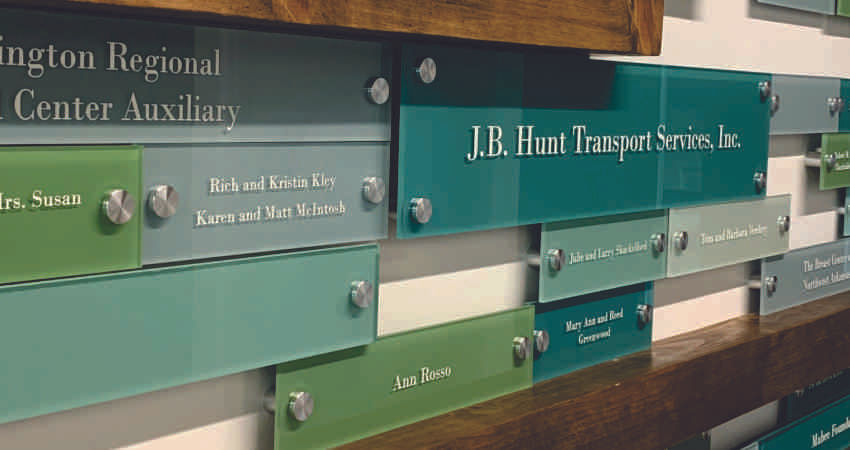
When we talk about keeping your recognition displays current, we're going deeper than aesthetics or administrative tidiness. This is a core function of donor stewardship. A misspelled name, an outdated giving level, or a missing major donor sends a clear, even if unintentional, message: their contribution isn't truly seen or valued. It's not a minor oversight; it's a crack in the very foundation of your donor relationships.
Imagine this all-too-common scenario. A longtime supporter of your university’s medical research fund just made a significant gift to the new capital campaign. They visit the campus with their family, excited to show them their name on the newly updated wing. But when they get there, they find their name is either missing entirely or still listed at their old giving level. The pride they felt instantly curdles into disappointment. They start to feel like just another transaction. A single negative experience like this can jeopardize decades of loyalty and even future legacy gifts.
The Financial Fallout of a Stagnant Display
The financial repercussions are very real. An outdated display projects an image of disorganization, which can make potential major donors think twice. If an organization can’t manage the simple details of its public acknowledgments, how can it be trusted to manage a seven-figure endowment? This perception risk is a silent killer of fundraising potential.
The data backs this up. Inconsistent stewardship practices can lead to 14.7 percentage point drops in donor retention. We've seen disorganized displays with a retention rate of just 48.3% compared to 63% for organizations with solid protocols in place. For institutions like hospitals and universities, it's often the mid-level donors who bear the brunt of this neglect, getting overlooked despite being the backbone of support. That's a surefire way to crater retention rates.
A donor wall is one of the most visible forms of gratitude an organization can offer. When it's inaccurate, it becomes a public testament to a broken process, undermining the very trust it was meant to build.
Beyond One-Off Corrections
The cost isn't just about replacing a single plaque, which can run hundreds of dollars per correction. The real expense is the compounding effect of lost trust. A donor who feels unappreciated is far less likely to respond to the next annual appeal, consider a planned gift, or champion your cause within their network.
This erosion of goodwill has a ripple effect:
Decreased Donor Lifetime Value: A single bad experience can dramatically shorten a donor's giving lifespan with your organization.
Reputational Damage: Disappointed donors talk. They share their experiences, potentially influencing other current or prospective supporters.
Increased Fundraising Costs: It costs far more to acquire a new donor than to keep an existing one. Neglect forces your team into a costly and exhausting cycle of acquisition.
Ultimately, keeping your recognition display current isn't an administrative burden; it's a strategic imperative. It’s a direct investment in the relationships that sustain your mission.
If you're looking at a display that has already fallen into disrepair, it might be time to rethink your approach. You might be interested in our guide on when and how to retire or refresh an existing donor wall.
Establishing A Rock-Solid Governance Framework
Let's be honest: most donor recognition errors happen in the gray areas. When a typo makes it onto the wall or a major donor is accidentally left off the annual update, it's rarely a single person's fault. It’s a system failure.
Moving from a reactive, "fix-it-when-it-breaks" mentality to proactive management is the single most important leap you can make. It all comes down to creating a clear system of ownership and accountability. Without a defined governance framework, responsibilities get scattered, approvals get bottlenecked, and mistakes inevitably slip through.
The goal here is to eliminate ambiguity. When a new major gift comes in or a donor’s name needs updating, everyone on the team should know exactly who does what, from initial data entry to final sign-off.
Assembling Your Stewardship Team
First things first, you need to define the key players. This doesn't mean creating a brand-new, bureaucratic committee. Often, it's as simple as assigning specific stewardship roles to existing team members. A small, empowered team is far more effective than a large, slow-moving one.
Here’s a look at the core roles that make up a successful governance team.
Core Roles In Your Recognition Governance Team
This table breaks down the essential responsibilities for keeping your donor recognition program accurate and running smoothly.
Role | Primary Responsibility | Key Tasks |
|---|---|---|
Data Steward | Acts as the gatekeeper of information, ensuring donor data is perfect before it goes anywhere else. | Verifying names and giving levels in the CRM; managing recognition name preferences. |
Relationship Manager | Serves as the primary, trusted point of contact for the donor. | Confirming naming preferences; securing approvals on mockups; handling sensitive communications. |
Project Lead | Coordinates the entire update process from start to finish, keeping everything and everyone on track. | Submitting work orders; managing vendor timelines; overseeing final installation or digital launch. |
With these roles clearly defined, you've already eliminated the most common points of failure.
Creating a governance framework isn't about adding red tape; it's about removing friction. When roles are clear, the process becomes smoother, faster, and far more accurate.
Defining Your Policies and Procedures
A truly dependable system hinges on a clear understanding policy vs procedure. Think of it this way: policies are the "what" and "why," while procedures are the "how."
Policies are the high-level rules that guide your program. For example, a policy might state: "All gifts of $25,000 or more will be recognized on the main campaign wall within 90 days of the gift date."
The corresponding procedure would then detail every single step required to make that happen. Who pulls the report? Who contacts the donor for their preferred listing? Who approves the spelling, and who places the order with the vendor?
Documenting these step-by-step procedures is your best defense against inconsistency, especially during staff turnover. It’s your playbook for getting it right, every time.
Your Core Governance Checklist
To make sure you've covered all your bases, use this simple checklist as your guide. This becomes your team's single source of truth for all display-related updates and a foundation for a sustainable program. If you need more high-level guidance, these objectives of a sustainable donor recognition program can help shape your strategy.
Data Integrity: Who is responsible for verifying donor names and giving levels against the CRM?
Approval Workflow: What is the exact sequence of approvals needed before an update goes into production?
Update Cadence: How often will the display be updated (e.g., quarterly, bi-annually)?
Donor Communication: Who communicates with donors to confirm their recognition preferences?
Vendor Management: Who is the designated point of contact for your design and fabrication partners?
By thoughtfully answering each of these questions, you build a robust system where every donor is recognized correctly and on time—reinforcing their incredible value to your organization.
Designing A Display That Can Evolve And Scale
Your recognition display should be a living testament to generosity, not a static monument that quickly becomes a logistical and financial headache. The design choices you make right at the start will determine whether you can keep your display current for years to come—or if you'll be locked into an expensive, inflexible system.
Thinking about future growth isn't just a "nice-to-have"; it's a financial necessity. So often, I see organizations design a beautiful wall for their current campaign, filling it to the brim. When the next fundraising initiative succeeds, they're left with a gorgeous but completely full display. This lack of planning creates a costly problem that was entirely avoidable.
The numbers paint a stark picture. A staggering 57% of nonprofit organizations report their physical recognition displays hitting capacity, forcing costly renovations that average $24,800. Even static walls, which average $12,400 to set up, rack up $1,800 a year in maintenance, plus $15-$35 per new plaque or $75-$300 for error replacements. You can see the full breakdown in these nonprofit donor recognition benchmarks.
Embrace Modular and Adaptable Systems
The secret to a future-proof display is to embrace a modular design philosophy from day one. Instead of commissioning a single, monolithic piece, think of your display as a collection of interconnected—and most importantly, interchangeable—components. This approach gives you ultimate flexibility.
With a modular system, you can add, remove, or update individual names or entire sections without disturbing the rest of the display. It's a total game-changer for maintaining accuracy and accommodating growth.
Here are a few powerful examples of modular design in action:
Magnetic Plaque Systems: Individual name plaques are backed with strong magnets that attach to a metal backer panel. Adding a new donor or correcting a typo becomes as simple as swapping out a plaque. No drills, no adhesives, no costly service calls.
Interchangeable Panels: The display is built from a series of panels that can be easily removed or reconfigured. A university, for instance, could dedicate panels to different graduating classes or campaign years, adding new ones over time without a complete overhaul.
Layered Glass or Acrylic: This elegant approach uses multiple layers of transparent material. Names can be printed on different layers, so updates only require changing a single sheet of glass rather than the whole structure. It keeps a sleek, modern look while offering surprising adaptability.
Planning for scalability isn't just about leaving empty space on a wall. It's about building a system where change is an expected and seamless part of its lifecycle, not a disruptive and expensive event.
Creating An Error-Proof Update Workflow
A solid, repeatable workflow is the engine that keeps your recognition displays running smoothly. Without one, you're just winging it, and even the best intentions can lead to embarrassing mistakes. The path from a gift being processed to a name appearing on the wall should be a well-oiled machine, not a chaotic scramble of last-minute emails.
Think of this process as your first line of defense against errors that can seriously damage donor relationships. It’s about turning a complex set of tasks into a predictable, manageable system. The goal is simple: ensure the information on your wall always mirrors your official records, saving you from those cringe-worthy corrections down the road.
Mapping The Journey From Gift To Display
Every organization is a little different, but the core steps for getting a name on the wall are pretty universal. Laying out this path clearly eliminates guesswork and ensures nothing falls through the cracks. It all starts the moment a qualifying gift is recorded and only ends when the donor’s name is installed perfectly.
Picture it like a relay race where each person on your team knows exactly when to grab the baton.
Gift Acknowledgement and Data Entry: The race begins when a gift is officially entered into your system. The Data Steward confirms the gift meets the criteria for recognition and flags the donor's record in the CRM for the next update cycle.
Donor Communication and Preference Confirmation: This step is non-negotiable. Your Relationship Manager needs to reach out to the donor personally. The goal here is twofold: express genuine gratitude and, crucially, confirm the exact naming preference for the display (e.g., "The Miller Family" versus "John and Susan Miller").
Internal Verification and Mockup Creation: Once the donor gives the green light on their name, the info goes to the Project Lead. They’ll work with your design partner to create a digital proof showing exactly how the name will look.
Final Donor Sign-Off: That mockup goes right back to the donor for one last look. This simple step is incredibly powerful. It gives the donor the final say and provides one last chance to catch a subtle typo, building immense trust in your process.
Production and Installation: Only after you have that written approval from the donor does the Project Lead authorize production with your vendor and get the installation on the calendar.
This visual shows how thinking about a scalable, adaptable system from the very beginning makes everything easier.

It’s all about a design philosophy that’s modular and well-planned, which is the secret sauce for an easy-to-update display.
The Power Of Multi-Step Verification
A single point of failure is the enemy of accuracy. Trusting one person to catch every little detail is just asking for trouble. Instead, your best bet is to build a system of checks and balances where both your internal team and the donors themselves are part of the solution.
The most effective workflows have at least two critical verification points:
Internal Data Audit: Before anything goes out to a donor, the Data Steward and Relationship Manager should huddle up. They need to cross-reference the proposed name with the CRM record and the original gift agreement.
External Donor Approval: The donor's final sign-off on the mockup is your ultimate safety net. It shifts the final confirmation to the one person who knows their name best.
This multi-layered approach might seem like it adds extra steps, but the time it takes is nothing compared to the cost, time, and reputational hit of fixing a mistake after it’s been permanently installed.
Integrating Your Workflow With Your CRM
Your CRM should be the undisputed source of truth for everything related to your donors. The more you can cut down on manual data entry, the better. When information gets copied and pasted between spreadsheets, emails, and vendor forms, the risk of human error goes through the roof.
Instead, make your CRM do the heavy lifting. Create custom fields or tags within each donor record to track exactly where they are in the recognition pipeline.
Pro Tip: Build a dedicated dashboard in your CRM just for tracking pending display updates. This gives the whole team an at-a-glance view of which donors are at which stage—from "Awaiting Naming Preference" to "Approved for Production."
A simple status field system can work wonders.
Status | Meaning |
|---|---|
Pending Confirmation | The Relationship Manager has reached out to the donor. |
Name Confirmed | The donor has provided their preferred recognition name. |
Mockup Sent | The digital proof has been sent for final approval. |
Approved for Production | Donor has signed off; ready for vendor order. |
This kind of integration creates a closed-loop system. The data lives in one central spot, the status is clear to everyone, and the potential for a slip-up is dramatically reduced. It's the technical backbone of a process that honors every donor, perfectly.
Putting a Regular Audit and Maintenance Schedule in Place
Think of your recognition display like any other valuable asset. It needs regular check-ups to maintain its integrity and impact. A "set it and forget it" mindset is a direct path to the kinds of errors and neglect that slowly chip away at donor trust. The best way to keep your display current and accurate is by implementing a systematic audit and maintenance plan, turning a potential liability into a powerful stewardship tool.
This isn't about creating more busy work. It’s about being proactive and reinforcing your commitment to honoring your supporters. A scheduled audit catches errors before a donor does, identifies physical wear and tear, and shows a deep institutional commitment to gratitude.
Setting the Cadence for Your Audits
First things first, you need a predictable schedule. For most organizations, a quarterly or bi-annual audit strikes the right balance. It’s frequent enough to catch issues quickly but not so often that it feels like a burden. The right rhythm really depends on your gift volume and the type of display you have.
Quarterly Audits: These are perfect for organizations with a high volume of gifts or those in the middle of a major campaign. This frequency ensures new major donors are flagged for inclusion right away.
Bi-Annual Audits: This is a fantastic standard for most institutions. A twice-yearly check-in is usually plenty to maintain accuracy and handle physical upkeep like cleaning or fixing a light.
Whatever you decide, get it on the calendar. Treat these audits like immovable appointments. This consistency is the absolute bedrock of a reliable maintenance program.
Routine maintenance is so much more than just cleaning plaques and checking for typos. It's a tangible act of stewardship that communicates to your donors, "We see you, we remember you, and we continue to be grateful for your support."
The payoff for this kind of consistency is huge. Organizations that put systematic stewardship programs in place—which includes keeping displays fresh—can boost donor retention by a stunning 18.2 percentage points, hitting a retention rate of 59.4%. You can find more insights on how stewardship impacts retention in this nonprofit benchmark study.
Your Essential Audit Checklist
A solid audit runs on a comprehensive checklist. Nothing gets missed. The process needs to cover both the data and the physical installation. Your governance team, especially the Data Steward and Project Lead, should spearhead this. One of the best ways to nail the data review is by automating repetitive tasks like report generation. It saves a ton of time, ensures consistency, and dramatically cuts down on human error.
Your audit should be broken into two distinct parts.
Part 1: The Data Accuracy Audit
This is where you meticulously cross-reference every name on your display with your master donor database or CRM.
Generate a Master List: Pull a complete report from your CRM of every single donor currently listed on the display.
Name Verification: Check each name on the physical or digital display against the CRM list. Is the spelling identical to the donor’s confirmed preference?
Giving Level Accuracy: Is each donor's placement on the wall a true reflection of their current cumulative giving or campaign gift level?
Identify Omissions: Run a separate report of all new donors who have met the recognition criteria since the last update. Are they on the list for the next production cycle?
Note Corrections: Create a clear, actionable list of any errors—typos, wrong levels, missing names—that need to be fixed in the next update.
Part 2: The Physical Condition Audit
Now, go walk the display. Look at it from a visitor's perspective.
Lighting: Are all the lights working? Any burned-out bulbs or flickering fixtures creating distracting dark spots?
Cleanliness: Is there dust, smudging, or grime on the plaques, glass, or the surrounding wall?
Damage Assessment: Look closely for scratches, chips, or any loose components. Are all the plaques securely fastened?
Overall Environment: Does the area around the display feel clean and inviting? Does it still feel like a place of honor?
By systematically working through this checklist every time, you create a repeatable process that guarantees your display remains a pristine and accurate tribute to your supporters' generosity.
Answering Your On-the-Ground Donor Wall Questions
Even with a perfect governance plan and a rock-solid workflow, the real world always finds a way to throw you a curveball. Keeping your donor wall flawless often comes down to handling those one-off scenarios that don't quite fit the process chart.
Having clear, consistent answers to these common questions is what separates a well-managed program from a chaotic one. This is the practical side of your strategy—the part that ensures your team can respond with confidence, prevent confusion, and keep every decision aligned with your stewardship goals.
How Often Should We Update Our Donor Wall?
There’s no single right answer here. The ideal timing really depends on the pace of your fundraising and the type of wall you have. A university in the quiet phase of a campaign has very different needs than a hospital foundation making a final, public push.
For modern digital displays, you have incredible flexibility. Real-time or weekly updates are completely doable and create a fantastic sense of momentum. It’s a great way to acknowledge gifts quickly, especially during a high-energy fundraising drive.
With traditional physical walls, a quarterly or bi-annual update is the gold standard for most organizations. This schedule strikes the right balance between acknowledging new gifts in a timely way without the logistical headaches and high costs of constant one-off installations. Bundling updates allows you to streamline production with your vendor, which saves a surprising amount of time and money.
What Is The Best Way To Handle A Mistake?
It’s going to happen. No matter how buttoned-up your process is, an error will eventually slip through. When it does, your response is what matters most. How you handle it can either pour salt in the wound or, believe it or not, actually strengthen the donor relationship. The key is to be immediate, transparent, and genuinely apologetic.
A swift, personal, and sincere apology can turn a significant error into a powerful moment of trust-building. It shows the donor you value their partnership above all else and are committed to getting it right.
Here’s your immediate action plan:
Get on the Phone: The moment you know, the Relationship Manager needs to personally call the donor. Own the mistake, apologize sincerely, and tell them exactly how and when you'll fix it.
Expedite the Fix: Call your vendor immediately and put a rush on the correction. Absorb every penny of the cost, no questions asked.
Close the Loop: Once the correction is installed, send a photo to the donor. Better yet, invite them to come see it in person. This provides closure and proves you followed through.
Do a Post-Mortem: After the dust settles, walk through your process with the team. Find out exactly where the breakdown occurred and put a new step in place to ensure that specific mistake can never happen again.
How Do We Manage Recognition For Anonymous Donors?
Respecting a donor’s wish for anonymity is a non-negotiable part of ethical fundraising. Full stop. But you can still honor the spirit of their gift on a public display without breaking their trust. The key is to sort this out during the gift agreement process.
For the wall itself, a simple and respectful listing like "Anonymous" or a warmer phrase like "A Friend of the Hospital" works perfectly within the appropriate giving level. This acknowledges the gift’s impact and shows other donors that all types of generosity are valued. Always, always confirm the exact wording with the donor beforehand—some may prefer no public mention at all, and that’s a choice you must honor.
At Stobbe Design, we partner with organizations to create recognition displays that are as beautiful as they are manageable. Explore our portfolio to see how we build scalable, accurate, and inspiring donor walls.


Comments