
Your Guide to Designing a Room Naming Plaques Program
Room naming plaques are a powerful way to honor generosity and tell a story, but their success hinges on a strong strategic foundation. Before you even think about design or materials, you need a clear, consistent policy. It’s the essential groundwork that manages donor relationships and protects your organization's integrity for years to come.
Building Your Donor Recognition Foundation
A thoughtful room naming plaque program begins long before a single piece of metal is engraved. It all starts with creating a solid framework that answers the big questions about recognition—ensuring fairness, transparency, and longevity.
Doing this foundational work prevents future misunderstandings and shows donors you’re a reliable steward of their support. If you skip it, you're setting yourself up for inconsistent recognition, donor dissatisfaction, and some really difficult conversations down the road.
This process is all about establishing clear policies, setting defined giving levels, and drafting legally sound agreements. Think of it as the blueprint for your entire donor recognition system.
Establish Clear Donor Recognition Policies
First things first: you need a formal donor recognition policy. This document is your organization's North Star, guiding every decision related to naming opportunities. It ensures every donor is treated equitably and that your recognition standards stay consistent over time, no matter who is leading the development team.
A strong policy should explicitly outline:
Who has approval authority: Designate a specific committee or board that gets the final say on all naming gifts. This avoids confusion and keeps the process clean.
Character and integrity standards: You absolutely need a morality clause. This gives your institution the right to remove a name if a donor’s future actions bring disrepute to the organization. It's a critical safeguard.
Contingency plans: What happens if a building is renovated, repurposed, or even demolished? Thinking about this now is crucial for managing long-term agreements.
A well-defined policy is your best defense against future conflicts. It transforms subjective decisions into a standardized, fair process, protecting both the institution and its relationship with supporters.
Define Specific Giving Levels
Once your core policy is in place, you can build out a clear hierarchy of giving levels. This is all about managing donor expectations and creating a transparent menu of naming opportunities. Donors need to understand exactly what level of contribution corresponds to naming a lecture hall versus a small study room.
For instance, a university hospital might set up tiers like this:
$5 million+: Naming an entire wing or building (e.g., The Miller Family Pediatric Wing).
$1 million - $4.9 million: Naming a major center or department (e.g., The Chen Center for Cardiac Research).
$250,000 - $999,999: Naming a large lecture hall, surgical suite, or prominent lobby.
$50,000 - $249,999: Naming an individual patient room, small conference room, or staff lounge.
These levels should reflect the visibility, prestige, and impact of the space. When you present these options clearly, it helps guide donor conversations and ensures the significance of the gift aligns perfectly with the prominence of the recognition.
Draft Comprehensive Donor Agreements
Every single naming commitment must be formalized with a signed donor agreement. This isn't just a formality; it's a legally binding document that memorializes the terms of the gift and protects both parties. It takes you beyond a handshake and creates a clear record of mutual understanding.
Your donor agreement for room naming plaques should detail several key elements:
The Exact Naming: Specify the precise wording that will appear on the plaque, like "The Dr. Eleanor Vance Conference Room." No ambiguity.
Duration of Naming: State how long the name will be in place. Is it for the life of the building, a set number of years, or in perpetuity? Be explicit.
Payment Schedule: If the gift isn't a single lump sum, outline the pledge payment schedule.
Renovation Clause: Explain what happens to the plaque and naming right if the space is significantly altered or repurposed down the line.
For example, if a library wing named for a donor is later converted into a digital media lab, the agreement should have already specified whether the name gets transferred to a new, comparable space or recognized in a different way. This kind of proactive planning is the hallmark of a professional and sustainable donor recognition program.
Designing Plaques That Embody Your Brand
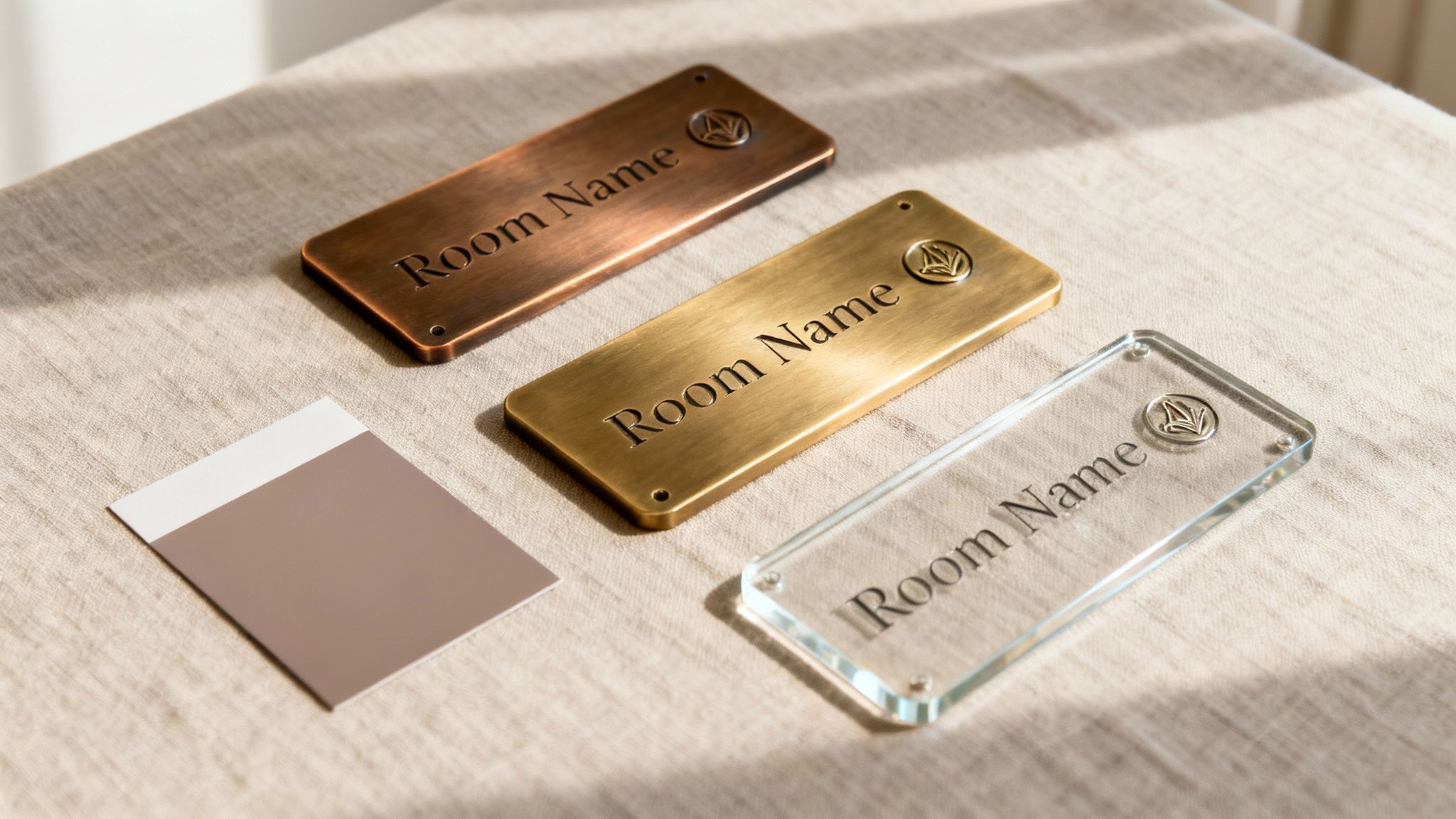
Room naming plaques are so much more than signs. Think of them as a physical extension of your organization’s brand and a permanent tribute to generosity. The choices you make here—from the material under your fingertips to the typeface you select—speak volumes about your institution's values and aesthetic.
A truly successful design doesn't just honor a donor. It melts seamlessly into your building's architecture, feeling as though it was always meant to be there. This is where your recognition strategy truly comes to life. It's a creative process of balancing deep respect for an individual with the integrity of your brand identity.
Choosing Materials with Meaning
The material you choose sets the immediate tone. It’s the first thing people see and touch, and it communicates a feeling long before a single word is read. Your selection needs to feel right for both your brand and the building itself.
Classic Metals (Bronze and Brass): These materials just feel permanent and prestigious. They're perfect for historic university campuses or cultural institutions aiming for a timeless, stately feel. Bronze, in particular, develops a beautiful, rich patina over time that only adds to its character.
Modern Metals (Aluminum and Stainless Steel): With their clean lines and sleek finish, aluminum and steel are a natural fit for contemporary settings. Think tech companies, modern healthcare clinics, or minimalist art galleries. They give off a crisp, professional vibe that feels fresh and forward-thinking.
Elegant Glass and Acrylic: Glass offers a sophisticated, airy aesthetic that works beautifully in spaces with a lot of natural light. For a similar look with greater durability and versatility, acrylic is a fantastic choice. It’s especially popular for vibrant, branded designs where colors and logos can be applied to the back for a high-end effect.
Imagine a healthcare foundation in a new, state-of-the-art hospital wing. They might choose brushed aluminum with blue acrylic accents to mirror the building's modern design and their brand colors. On the other hand, a century-old museum would almost certainly select cast bronze to complement its historic architecture.
Weaving in Your Brand Identity
A cohesive plaque program uses consistent brand elements to create a unified experience throughout your facility. This is your chance to reinforce your visual identity in a subtle, elegant way. It's about integrating your logo, typography, and color palette so that it feels intentional, not like a last-minute addition.
For instance, your brand's primary typeface could be used for the room's name, while a complementary font is reserved for the donor's name. This creates a clear visual hierarchy. When incorporating your logo, consider a subtle application—maybe etched in a corner or used as a faint watermark—so it never overpowers the tribute to the donor.
Great plaque design is a delicate balance. The goal is to make the plaque feel like a part of your institution's family of branded materials, while ensuring the donor's name remains the clear focal point of the tribute.
Design Harmony and Architectural Context
The most effective room naming plaques simply belong. They complement the architectural details of the space rather than competing with them. This means getting thoughtful about size, shape, and overall composition. A large, ornate bronze plaque might look magnificent in a grand, high-ceilinged lobby but would feel completely out of place in a small, intimate consultation room.
To make sure your designs translate perfectly from concept to reality, it's worth reviewing some professional artwork submission tips. This level of detail reflects the growing investment organizations are making in their physical spaces. In fact, the global signage market, which includes donor recognition, was valued at USD 52.7 billion in 2025 and is projected to hit USD 97.3 billion by 2035. This growth underscores just how important it is to create meaningful environments that honor supporters and strengthen who you are as an institution.
Crafting Plaque Wording for Lasting Impact
The message etched onto a room naming plaque is there forever, so every single word counts. This is where the honor becomes tangible—transforming a generous donation into a physical legacy. The right wording feels respectful, sincere, and perfectly aligned with your institution’s voice. The wrong wording? It can come across as clumsy or impersonal.
Striking that perfect balance between honoring the donor and telling your organization's story is a real art. It means thinking carefully about everything from naming conventions to dedication statements, and even how the plaque will be made. Each choice shapes the final impact.
Choosing the Right Naming Convention
How you phrase the donor's name sets the tone for the entire plaque. There's no single "correct" way, but different formats absolutely send different messages. The choice usually comes down to the donor's preference and the nature of their gift.
Here are a few common approaches I see:
Direct Naming: Think, "The Jane and John Smith Family Center." This style is confident and direct, weaving the donor's name right into the identity of the space. It’s a popular choice for cornerstone gifts that fund a whole new building or wing.
Honorific Naming: "In Honor of Jane and John Smith." This format is a classic, respectful tribute. It clearly states that the space is dedicated to recognizing their incredible generosity. It’s timeless and always appropriate.
Memorial Naming: "In Memory of John Smith." This phrasing is reserved for posthumous gifts or dedications. It offers a heartfelt remembrance, celebrating an individual's impact and legacy.
My biggest piece of advice: Always, always get final written approval from the donor or their family on the exact wording. A simple sign-off step prevents costly and embarrassing mistakes before the plaque ever goes into production.
Writing Concise and Meaningful Dedications
Beyond the name itself, a short dedication can add a wonderful layer of warmth and context. The key here is to keep it brief. A plaque isn't the place for a long biography; it’s a tribute. The goal is to capture the spirit of the gift in just a few powerful words.
Try to write a brief statement that connects the donor's generosity back to your organization's mission. For instance, a plaque for a new university science lab might read:
The Dr. Evelyn Reed Laboratory Dedicated with gratitude for her lifelong commitment to scientific discovery and student mentorship. October 12, 2024
This text is short, personal, and reinforces the very purpose of the space. To get your creative juices flowing, you can explore various samples of appreciation plaque wordings that really nail the right tone.
Getting Plaque Sizing and Placement Right
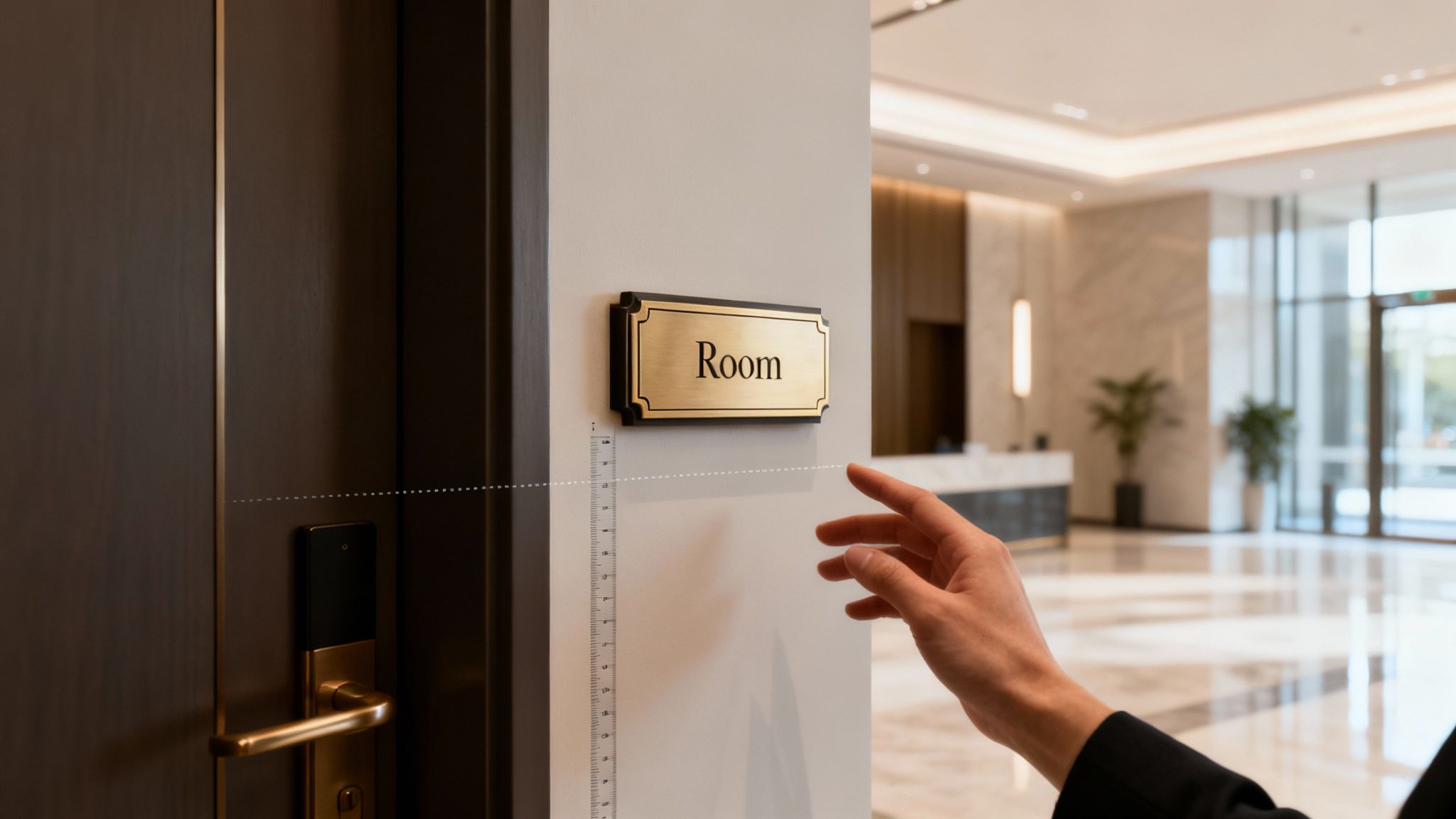
You can have the most beautifully designed room naming plaque in the world, but if it’s too small to read or tucked away in an awkward corner, it completely misses the mark. Sizing and placement aren't just finishing touches; they are core elements that make your tribute feel intentional and respectful, not like a tacked-on obligation.
The real art is striking that perfect balance between visibility and subtlety. You want the plaque to be noticed and appreciated without clashing with the architectural vibe of the space. Getting this right is a thoughtful mix of sizing the plaque for its environment, following key accessibility standards, and applying a bit of good old-fashioned common sense.
Scaling Plaques to the Space
There’s no magic, one-size-fits-all formula for plaque dimensions. The right size is always, always relative to its surroundings. A plaque that looks substantial next to a small office door will seem completely lost in a grand, two-story atrium. Context is everything.
I've seen this play out in countless projects. Here’s how to think about it:
For a small office or consultation room: A smaller plaque, maybe 5" x 7" or 6" x 8", feels just right. It’s intimate and doesn’t dominate the wall, matching the personal scale of the room.
For a standard classroom or conference hall: Here you need something a bit more prominent, like an 8" x 10" or 9" x 12". This ensures the plaque is easily readable from a few feet away as people come and go.
For a major lobby, theater, or gymnasium: This is where you can make a real statement. A larger plaque, maybe 12" x 18" or even bigger, is necessary to hold its own in a high-ceilinged, expansive area.
Before you commit, here’s a simple trick I always recommend: cut a piece of paper to your proposed size and tape it to the wall. Seriously. Step back and look at it from different angles and distances. This quick mock-up will tell you instantly if the scale feels right for the room.
Optimal Placement in Common Areas
Beyond individual rooms, think strategically about how to leverage high-traffic zones where plaques can make the biggest impression.
Lobbies and Main Entrances: These are prime real estate. Plaques here should be placed in well-lit spots where visitors naturally pause, like near seating areas or the main directory.
Hallways and Corridors: Install plaques consistently on the same side of the doorway for each room. This creates a clean, rhythmic, and professional look as people walk down the hall. A common mistake is placing them too close to corners where they get missed entirely.
When you thoughtfully consider scale, accessibility, and location, you ensure each plaque fulfills its true purpose: to honor generosity in a way that is visible, dignified, and perfectly integrated into its environment.
Partnering with a Fabrication Expert
Choosing the right fabrication partner is one of the most critical decisions you'll make. This isn't just about finding a vendor; it's about building a collaborative relationship. A great fabricator will do more than just make the plaque—they'll offer expert advice on materials, provide crystal-clear proofs, and communicate proactively every step of the way.
When you're vetting potential partners, always ask to see examples of their work that are similar to what you have in mind. Look closely at the quality of the finish, the sharpness of the engraving, and the overall craftsmanship. It tells you everything you need to know.
Once you’ve found your partner, the proof review process is non-negotiable. Before a single piece of metal is cut, you should receive a digital mock-up showing the exact layout, spelling, fonts, and placement. This is your last chance to catch an error. Trust me, a simple typo is an incredibly expensive mistake to fix after a plaque has already been produced.
For a deeper look at the financial side of recognition projects, check out our guide on how to plan and budget for your donor wall project.
Coordinating a Smooth Installation
The final step is getting those beautiful plaques up on the wall. A seamless installation is all about minimizing disruption and ensuring a polished, professional finish. Work closely with your facilities team and the installer to schedule the work during off-peak hours, especially if the plaques are going up in high-traffic hallways or busy common areas.
Before the installer even arrives, do a final walkthrough of the space. Use painter's tape to mark the exact placement for each plaque, referencing your design plan and any ADA guidelines. This little bit of prep work eliminates any guesswork on installation day, leading to a swift, precise process that finally brings your vision to life.
Common Questions About Room Naming Plaques
When you're running a room naming plaque program, a lot of practical questions are bound to pop up. Getting clear, consistent answers is the key to moving forward with confidence and making sure your program feels fair and respectful to everyone involved.
Let's dig into some of the most common questions we hear from clients.
How Long Should Naming Rights Agreements Last?
This is a big one, and the answer really depends on the size of the gift. For those truly transformative contributions that shape your institution, naming rights often last for the life of the building. It just makes sense.
But for smaller gifts tied to individual rooms or specific spaces, a fixed term is much more common and practical. We typically see agreements set for 10 to 25 years.
Your best move is to clearly define these terms in your donor recognition policy, tying them to specific giving levels. This manages expectations right from the start and ensures you’re being consistent. It’s also smart to include a clause explaining what happens if the building is ever renovated or repurposed down the line.
What Are the Most Common Wording Mistakes to Avoid?
I've seen it all, and the biggest pitfalls are almost always the simplest. Overly complicated language, inconsistent formatting from one plaque to the next, and—of course—typos. A second set of eyes is absolutely your best friend here. Always have multiple people proofread any text before it goes to the fabricator.
Another classic mistake is forgetting to get final, written approval on the wording from the donor or their family. A simple sign-off form can save you from an expensive and embarrassing redo. Remember, the best plaque wording is concise, heartfelt, and meticulously proofread.
Can We Include a Corporate Logo on a Plaque?
Absolutely. It’s very common to include a corporate logo on a plaque for a room sponsored by a business. The trick is to establish a clear design hierarchy in your recognition policy before you ever need it.
Your policy should spell out the guidelines for logo size and placement relative to any names or text. This keeps everything looking tasteful, consistent, and professional across all your room naming plaques, preventing a company logo from overpowering the tribute itself.
A professional designer can be a huge help here, creating a balanced layout that honors your corporate partner without compromising your institution's aesthetic.
At Stobbe Design, we specialize in creating custom donor recognition walls and plaques that beautifully honor generosity. We guide you through every step, from design to installation, to ensure your vision becomes a lasting tribute. Explore our work and see how we can help you celebrate your supporters at https://www.stobbedesign.com.


Comments